
Electronics development capabilitiesFrom concept to integrated electronics
From concept to integrated electronics
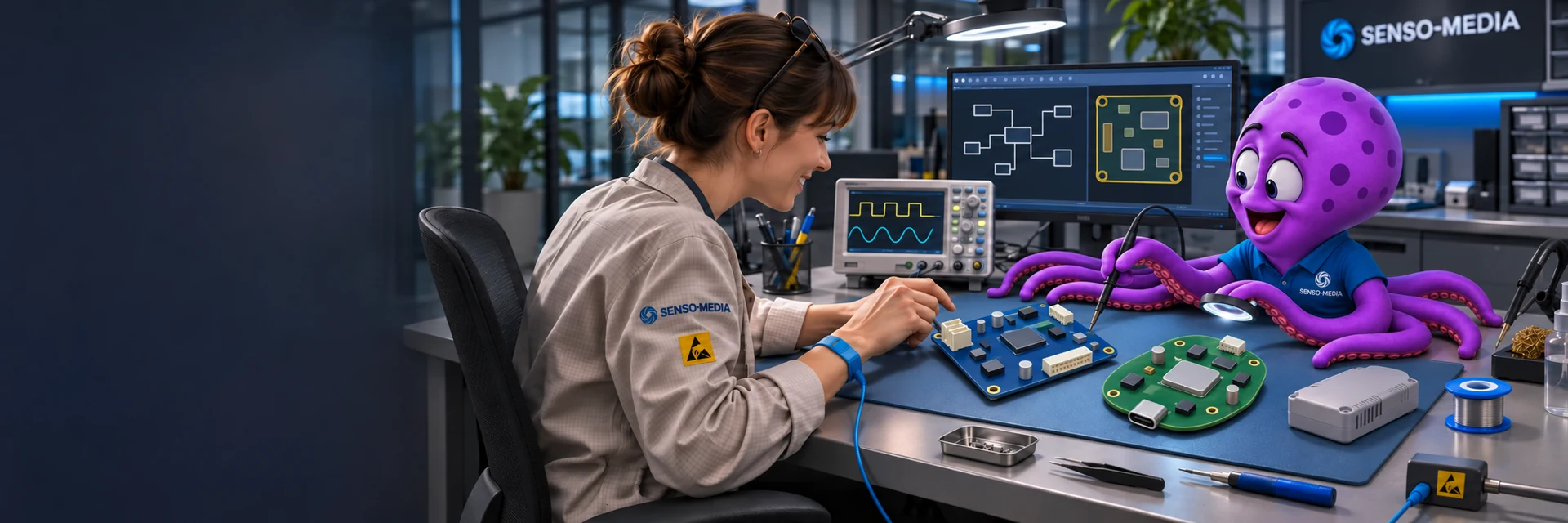
SENSO-MEDIA develops the electronics used in its products in-house: circuit schematics, PCB layouts, embedded software and enclosures. We have the boards manufactured and, when required, fully populated, so they arrive assembled. Before integration, only the software needs to be loaded.
We have designed circuits ranging from alarm control units and USB peripheral management boards to palm-sized cellular devices. Here are three examples.
Our electronics development capabilities
| Area | Our capability |
|---|---|
| Circuit design | Design of microcontroller-based controllers, power supplies, communication circuits, inputs and outputs |
| PCB design | Boards designed for single- or double-sided assembly, with up to six layers and more when required |
| Components | Design-in and outsourced assembly of BGA and other high-density packaged components |
| Manufacturing | We arrange board manufacture, including fully populated assemblies delivered ready-assembled |
| Programming | We load the software onto the finished board before integration; no other finishing work is required |
| 3D design | 3D models of boards, and enclosure modelling and design |
| 3D printing | In-house 3D printing of enclosures and prototypes in prototype quantities |
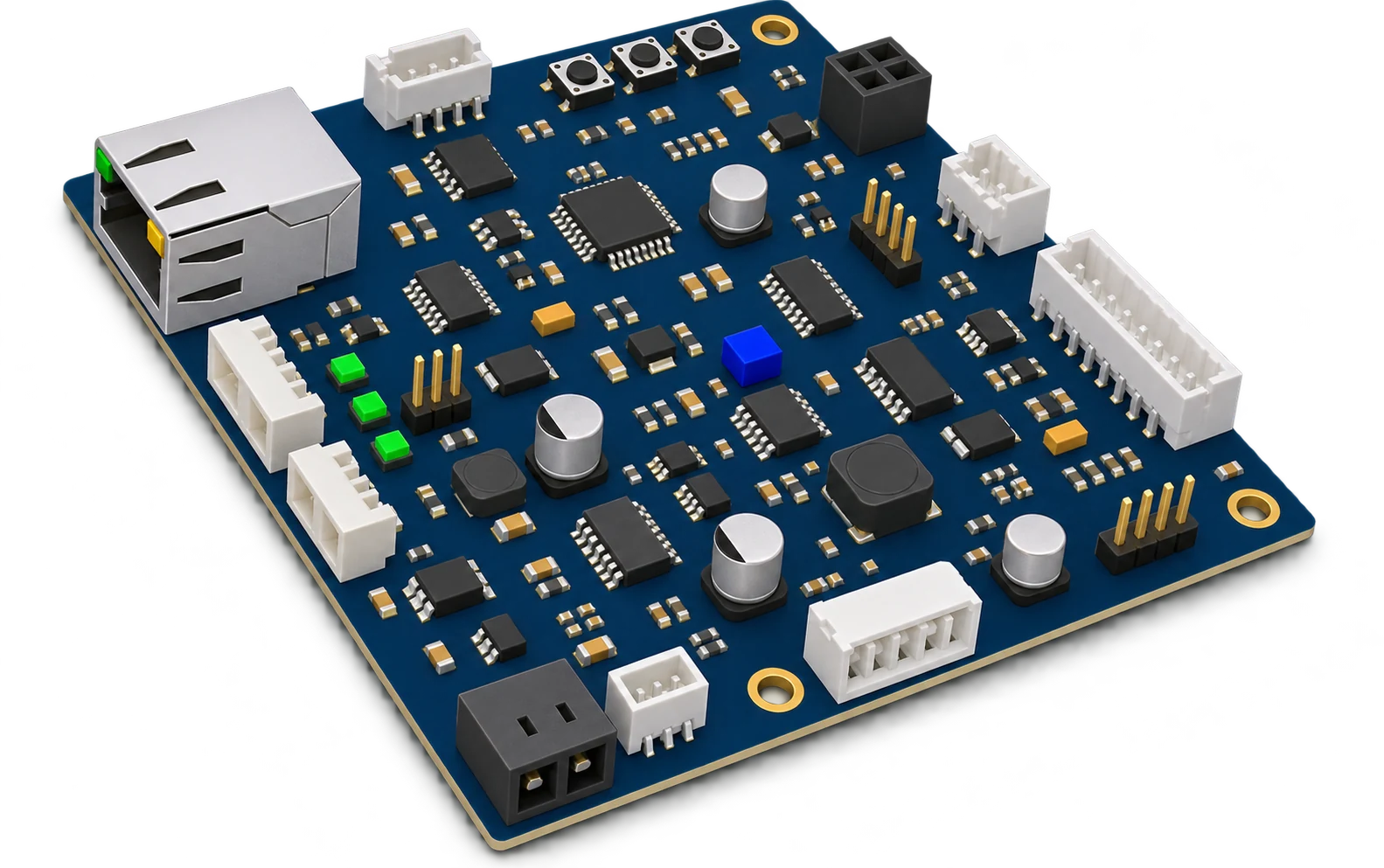
Alarm control board
An Ethernet alarm control unit supporting both 12 V and 24 V systems, battery management, sensor inputs and siren control.
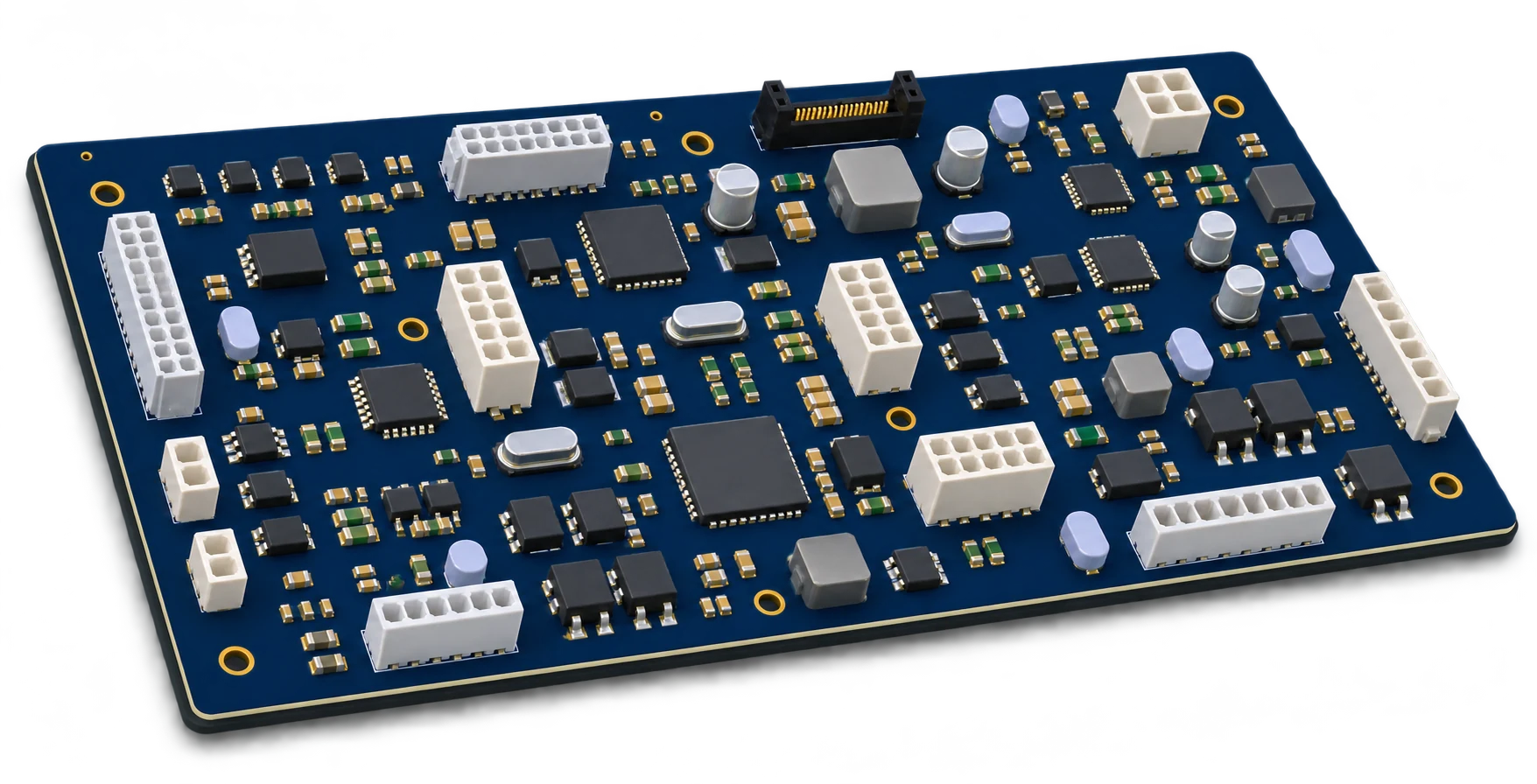
USB-controlled peripheral management board
This board controls a device’s peripherals through a single USB connection. It communicates with external devices over serial interfaces and switches peripheral power supplies. Its integrated USB hub supports additional USB devices, while its USB sound card includes a power amplifier and microphone input.
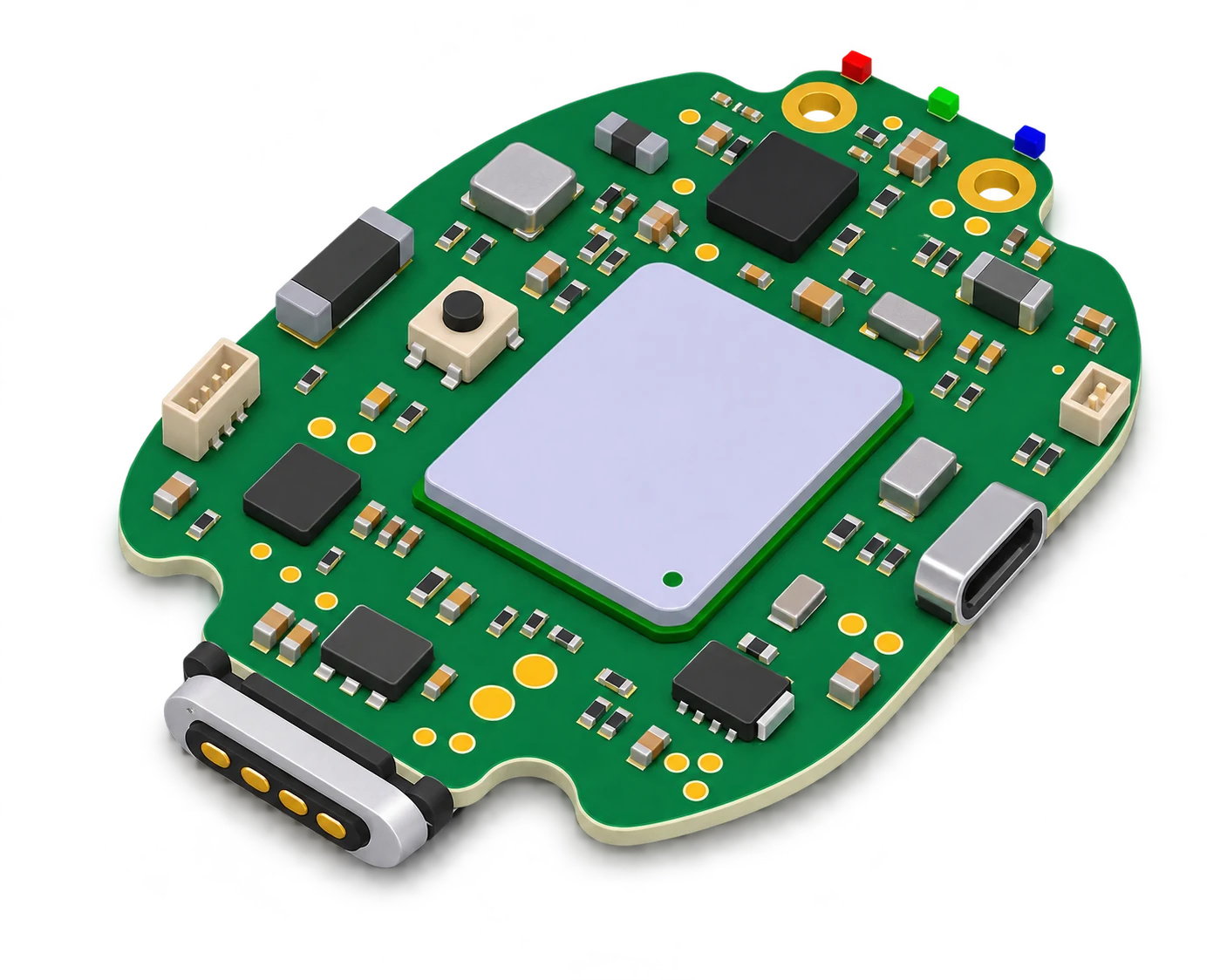
Portable cellular device
A palm-sized, double-sided assembly with a cellular module, integrated antennas and an SOS button. The boards arrive in manufacturing panels of five; we designed the enclosure to fit them.
How a board is developed
Requirements assessment
We define what the device must do: inputs, outputs, communication, power supply and dimensions.
System design
We select the microcontroller and key components, considering cost and availability.
Circuit schematic
We design the entire circuit, from the power supply to the connectors.
PCB layout and 3D model
We position components and route connections, then check fit and clearances in the board’s 3D model.
Enclosure
We design the enclosure around the board and create a 3D-printed prototype.
Manufacturing
We arrange manufacture and component assembly on one or both sides.
Programming and testing
We load the software onto the finished board and verify its operation.
Integration
The tested board is installed in the enclosure and integrated into the product.
Why work with us?
One team, the whole process
Circuit design, PCB layout, software and enclosure development are coordinated in one team, avoiding information loss between design stages.
Designed for manufacture from day one
From the design stage, we optimise for assembly, testability and component availability.
Reliability
We design devices intended to operate for years without supervision.
Transparent collaboration
The customer sees the results at every milestone and receives the complete documentation.
Need custom electronics development?
Looking for a custom hardware component, control unit, communication board or electronics for an existing device? Tell us what you need to achieve. We consider the circuit, embedded software and enclosure together, and propose an implementation after a short consultation. Get in touch with our team.