Central touchpoint manager
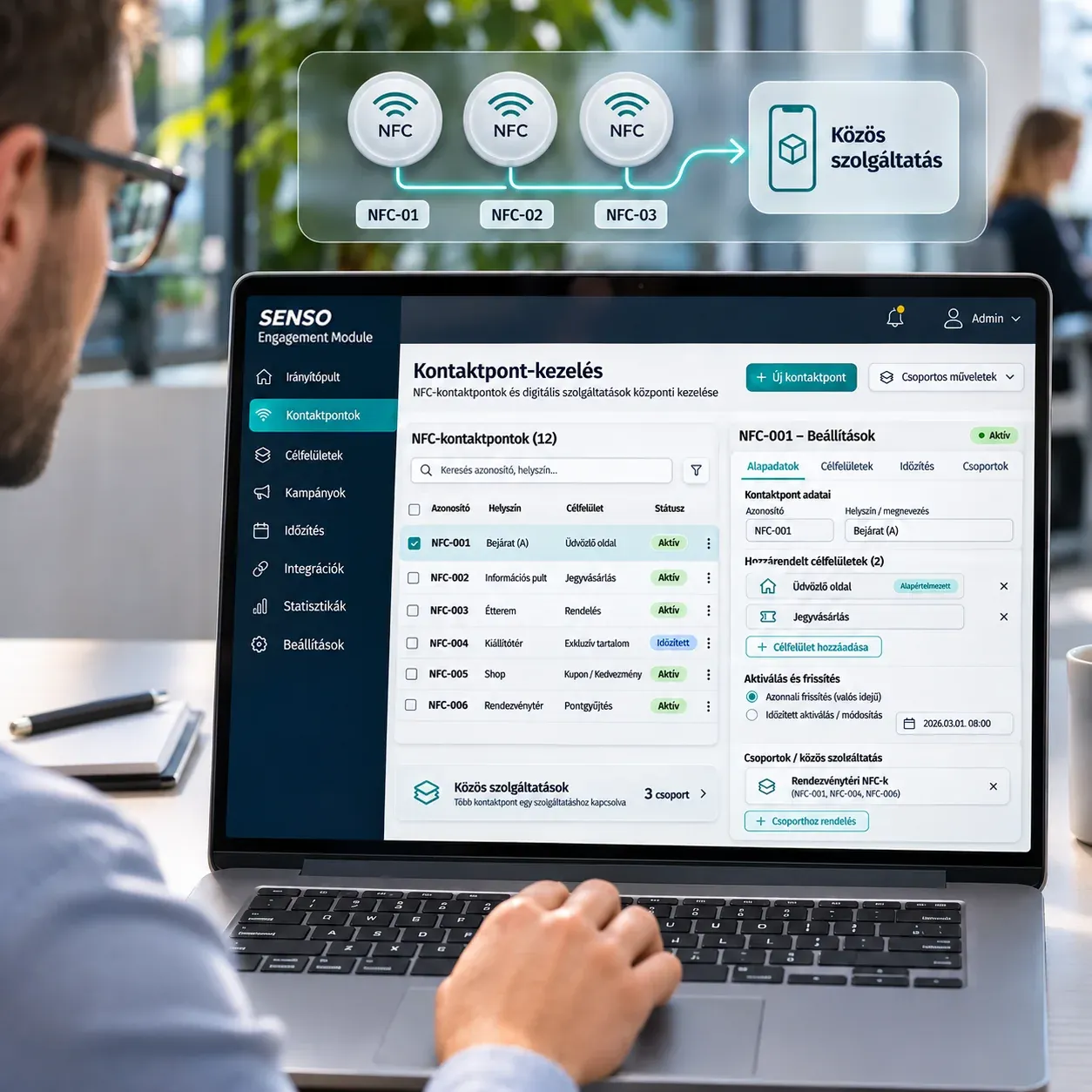
Destinations and journeys are assigned to uniquely identified NFC points. Settings update in real time or on a schedule, and several points can lead to one service.
 Let’s talk!
Digital services available with a single tap
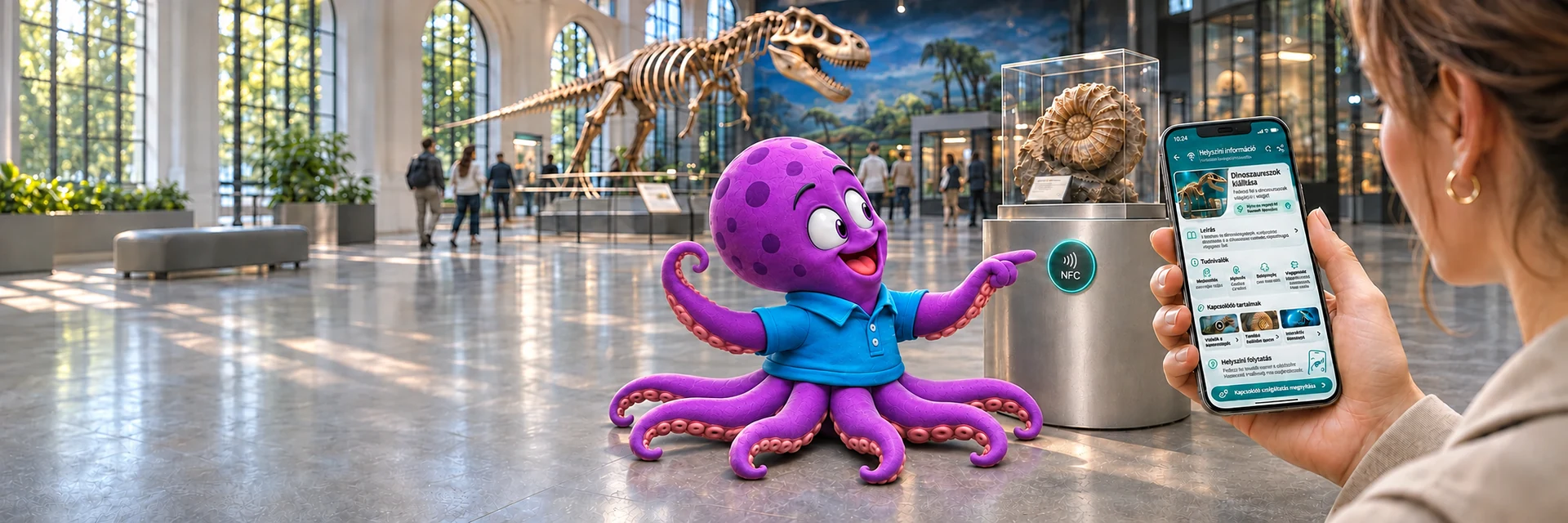
Engagement Module connects physical locations with digital content on phones. Configurable NFC touchpoints link to games, information pages, ticket and service purchases or ordering interfaces.
Users tap a compatible phone on a touchpoint to access the assigned service. This can open a web interface or an integrated app function, depending on the campaign or local task.
Touchpoint destinations are updated centrally, immediately or on a schedule. The same physical device can provide information, start points collection, offer coupons or unlock exclusive content at different times.
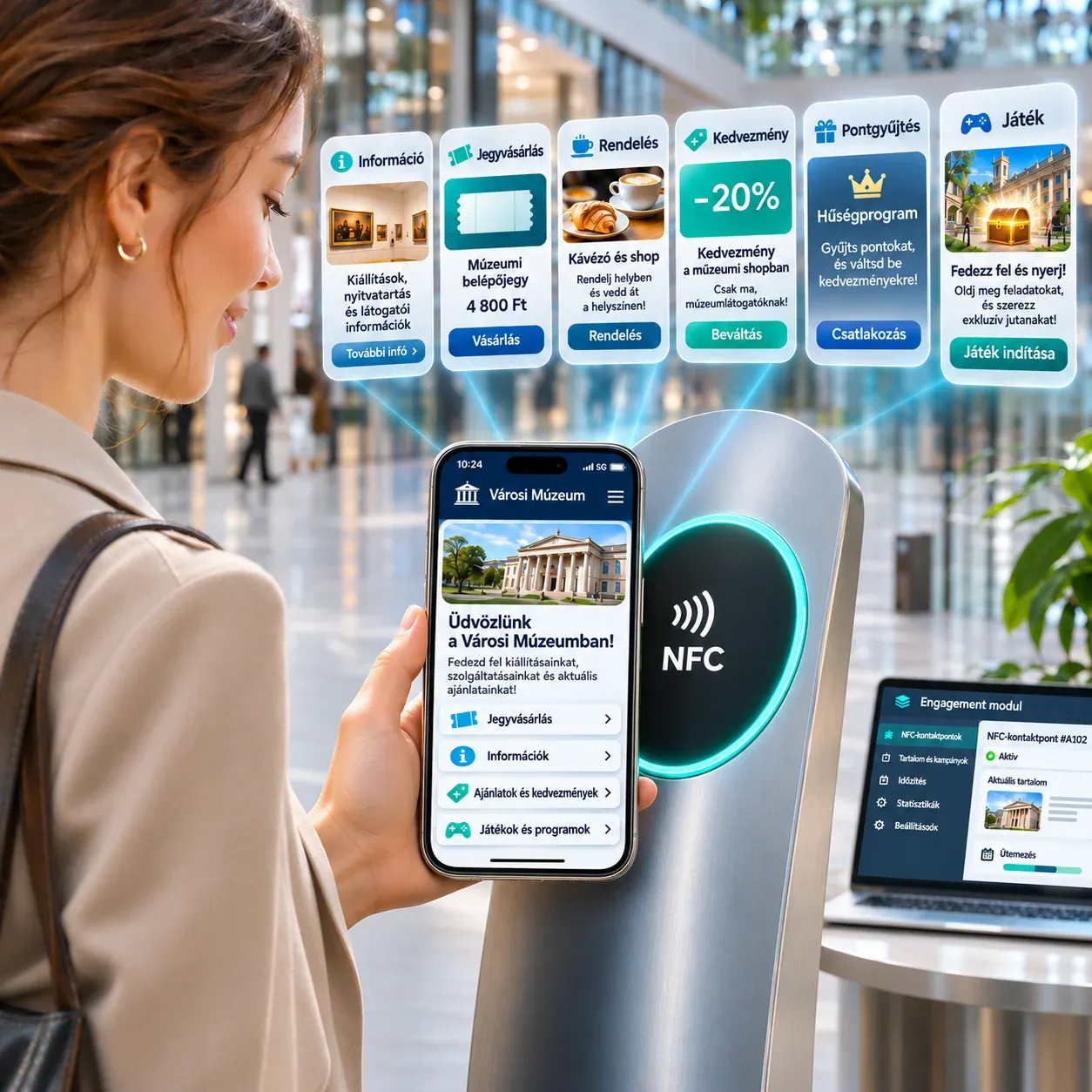
We design the user interface and operational tasks as a coordinated system, choosing a deployment configuration suited to business objectives and site conditions.
The phone and NFC touchpoint connect the location to selected content.

Touchpoints and destinations are managed through clear administration tools.

Connect and XP integration can reward specified interactions.

Compact, securely mountable and brand-customisable touchpoints fit their surroundings.

Central settings adapt the device to a new campaign or service.

Content adapts to current needs and planned events.
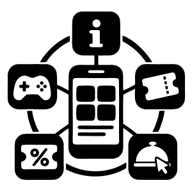
Information, games, tickets, coupons and ordering can connect to the solution.
Connected software components provide user functions and back-end processes.
Destinations and journeys are assigned to uniquely identified NFC points. Settings update in real time or on a schedule, and several points can lead to one service.
We can create gaming, information, ticketing, service purchasing or ordering interfaces. Touchpoints can also connect to existing app functions and other SENSO systems.
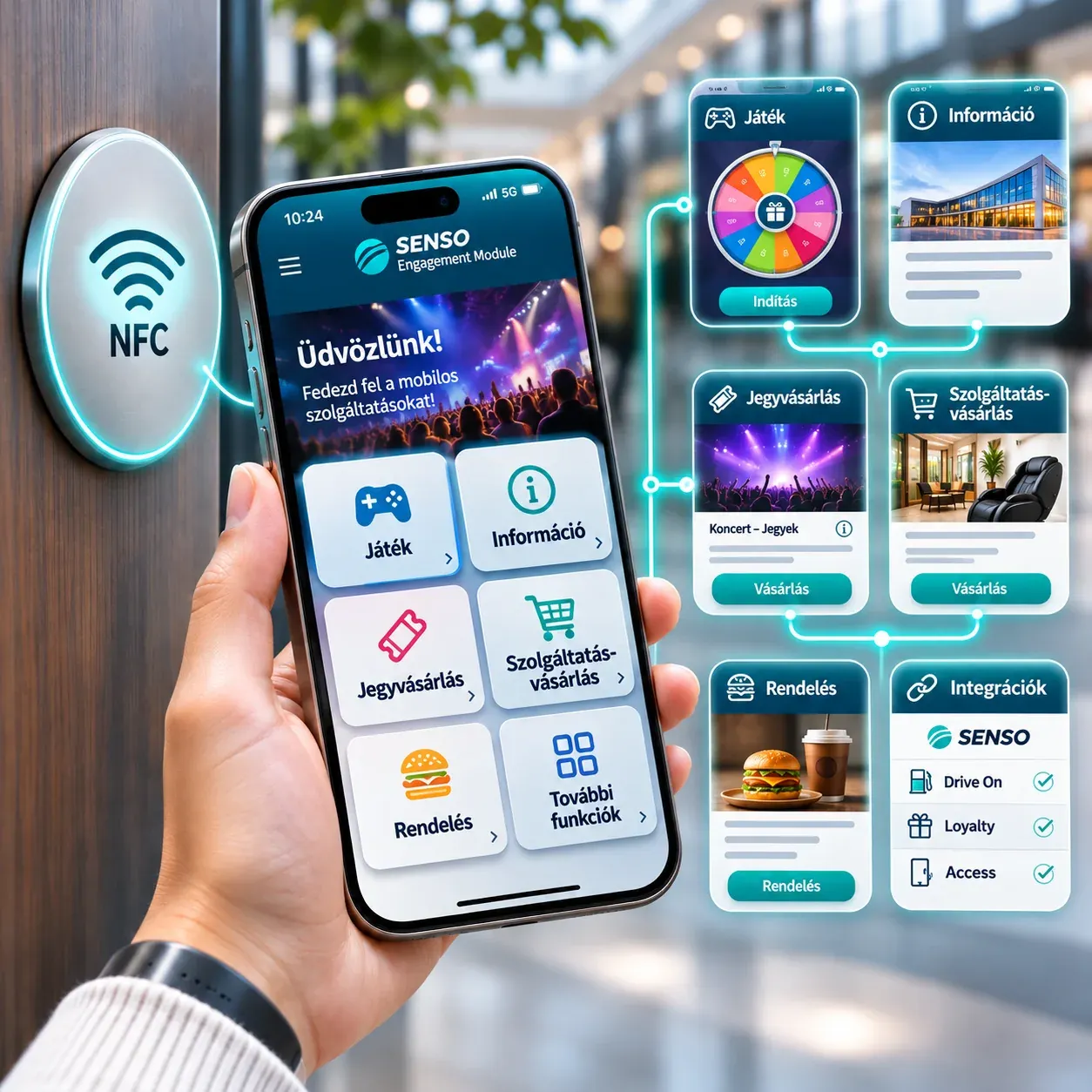
Deployment can include system integration, branding and development adapted to the existing environment. The precise scope is defined as part of the project.
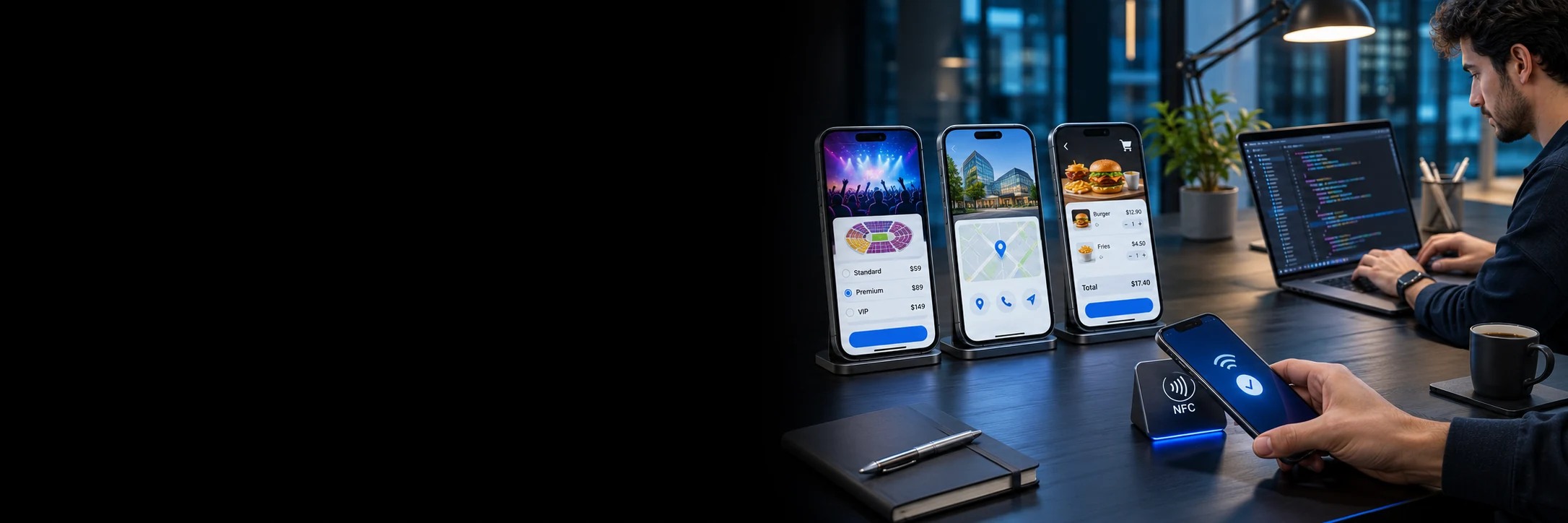
We create web or embedded app interfaces suited to venue goals. Games, information, ticketing and ordering require different data and processes, so content and integration are planned together.

Digital interfaces and physical touchpoints can match the partner’s branding. Markings should make the tap interaction and its purpose clear, with design and information supporting service use.
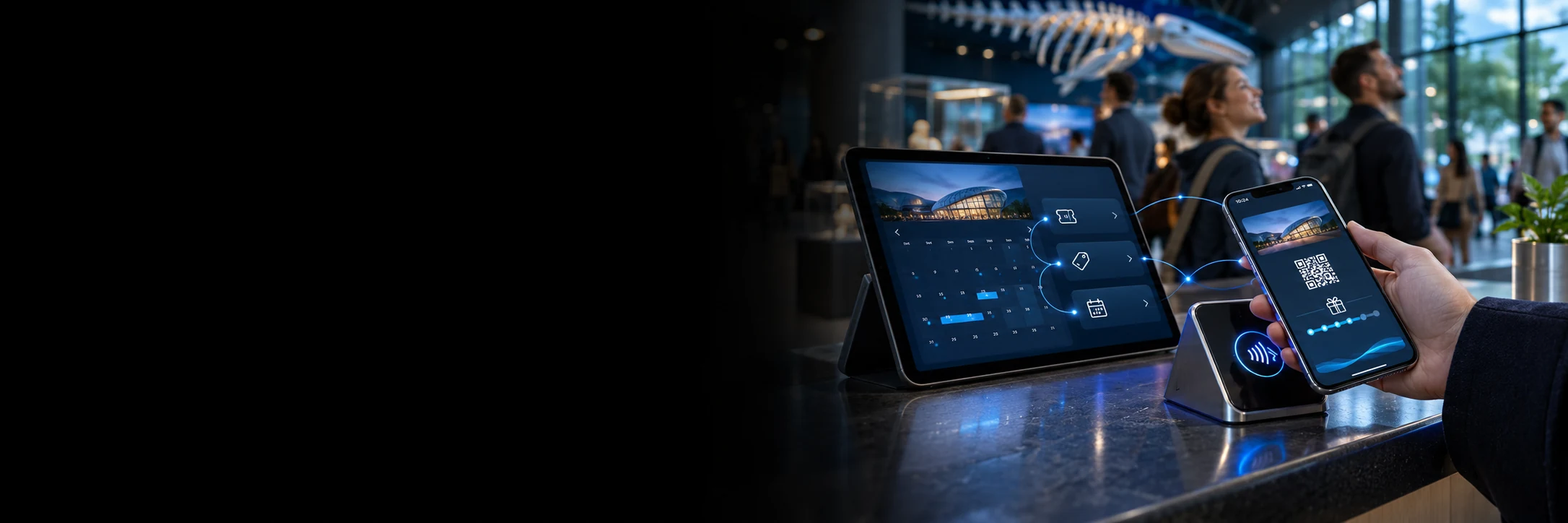
Content follows the venue’s programme and current offers. During deployment, we define user identification, rewarded events and data exchange. Devices can later be reassigned to new digital journeys.
Use of Engagement Module depends on assigned content. A single tap can start an independent action or become part of a digital experience spanning locations.
Each NFC point has its own identifier in central management, allowing different locations to connect to different digital tasks.
A touchpoint can open web content or a suitably integrated app function, taking the phone directly to the configured interface.
The same content can be assigned to several identifiers, allowing campaigns across locations to share one digital back-end.
Assigned content and links update centrally. Installed devices can offer new services or current promotions.
Assignments can change at predefined times, simplifying campaign and event preparation.
A tap can start a sequence of actions. Information requests can lead to an offer, questionnaire or service purchase within the configured interfaces.
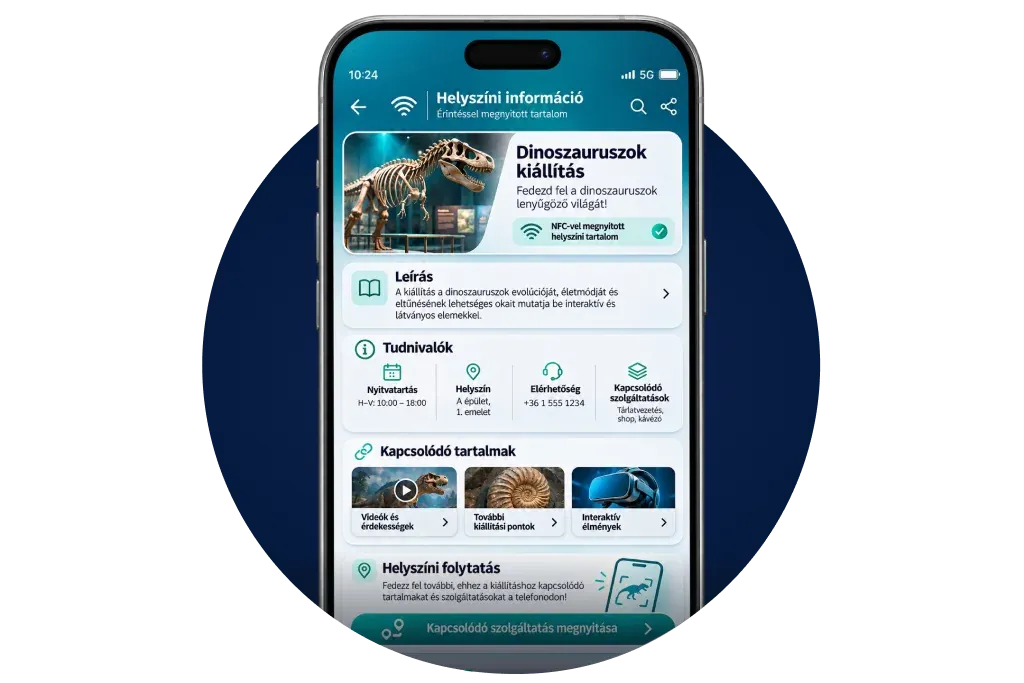
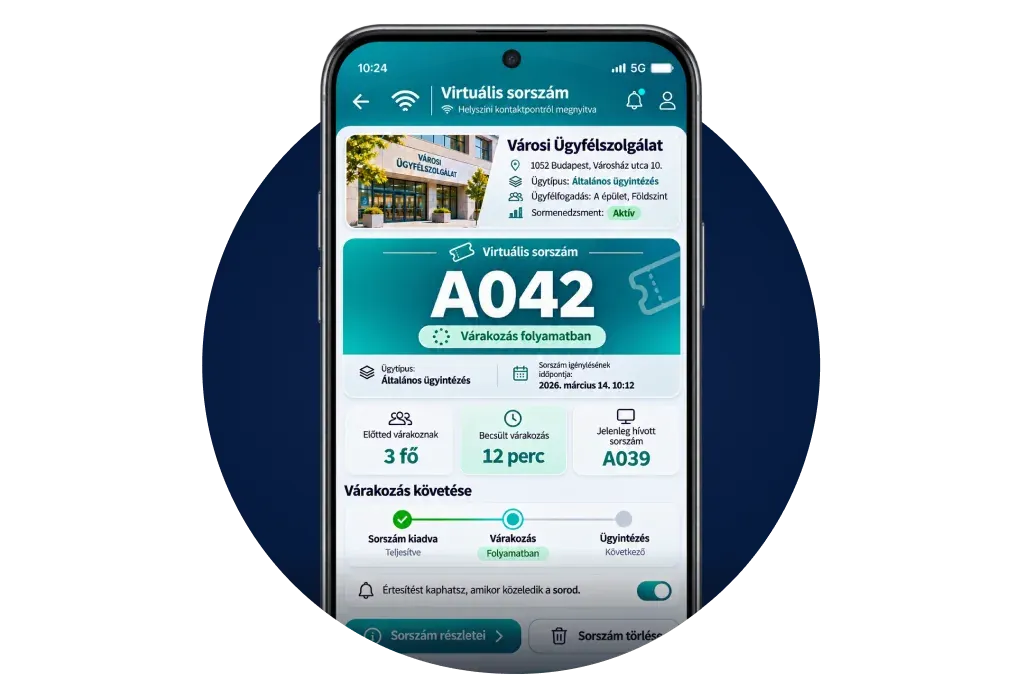
SENSO Queue opens queue interfaces, while Generic Info continues kiosk information searches on mobile. Connections are designed for the local system.
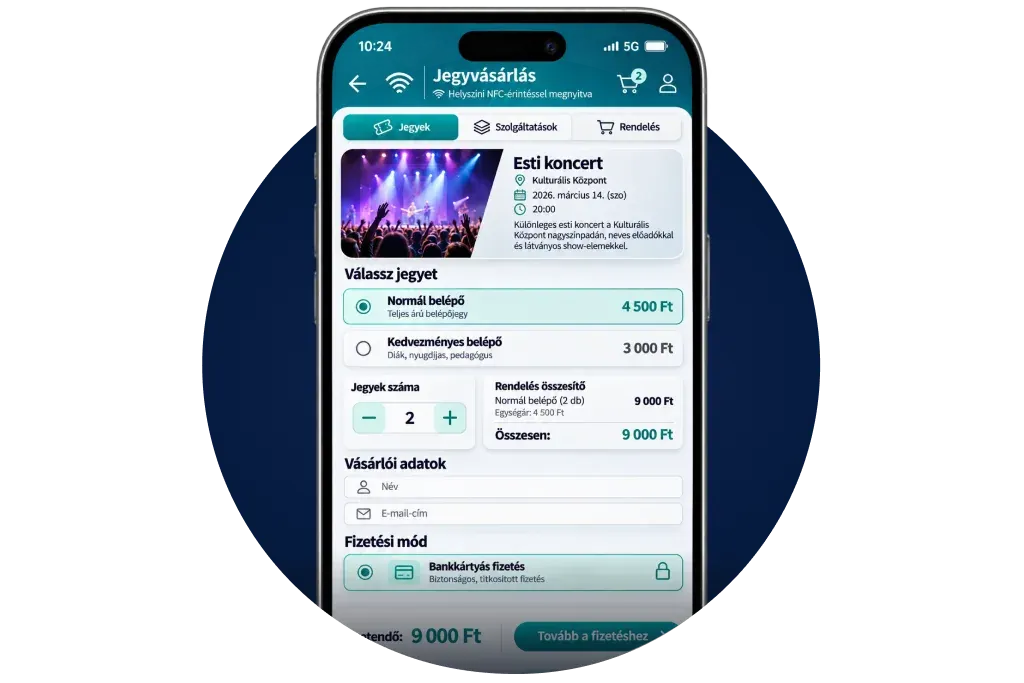
A tap can open a sales or ordering journey on the phone. Transactions and data transfer are designed with the connected system.
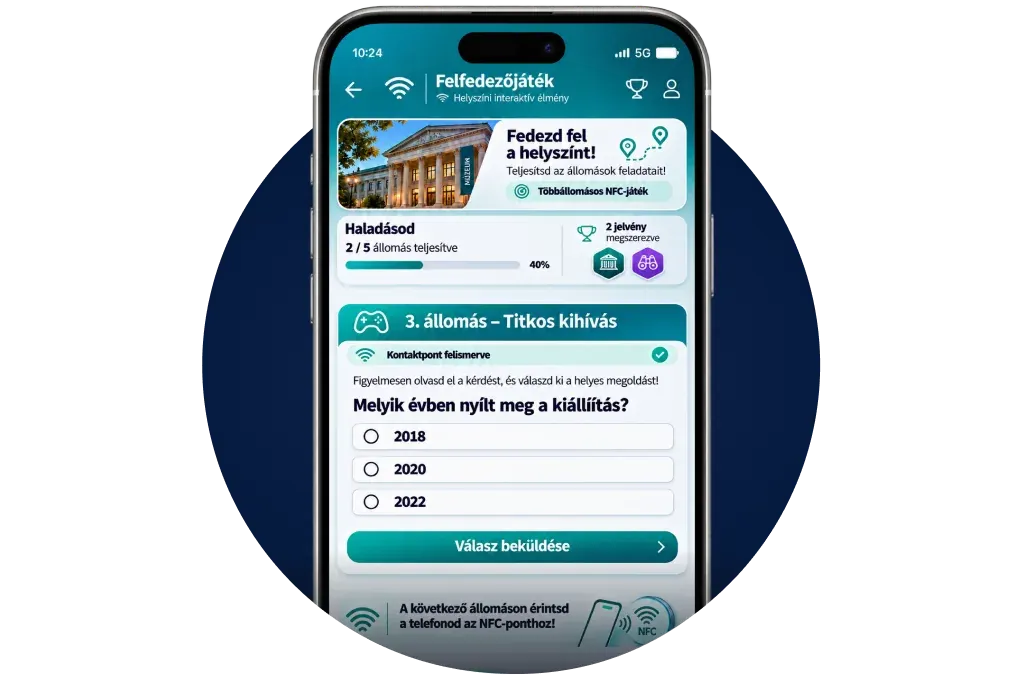
Custom mobile games and campaign interfaces can be created for touchpoints. Multiple points can form stages of an exploration game or promotion.
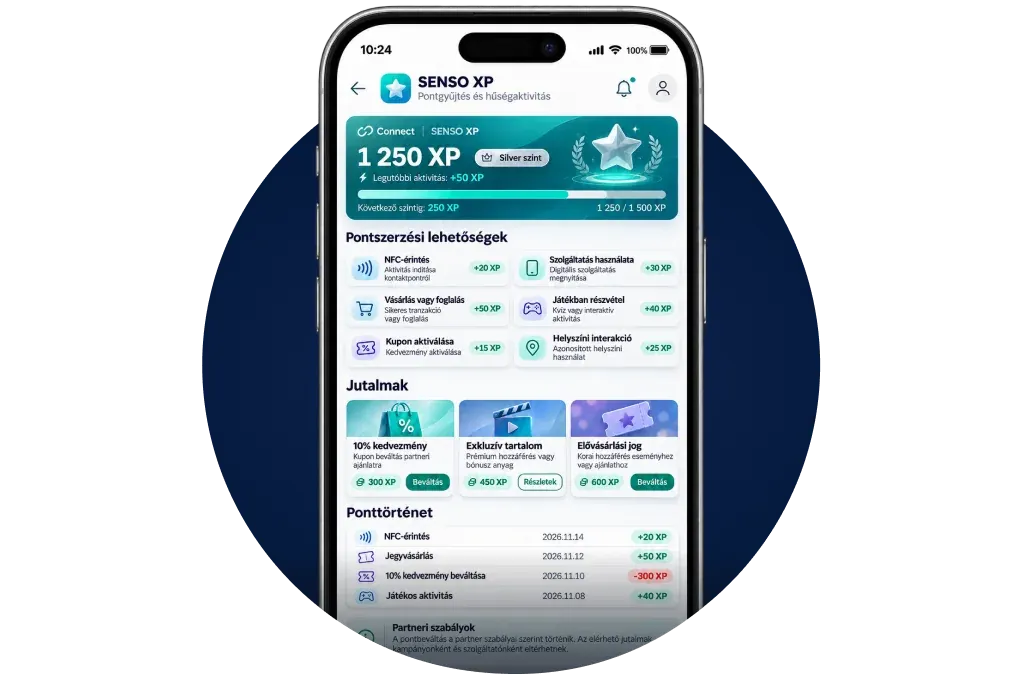
Identified on-site activities can earn points under configured rules. Points can be redeemed for discounts, exclusive content or advance purchase rights.
The back-end makes physical device functions editable. Content follows current campaigns without requiring new devices each time.
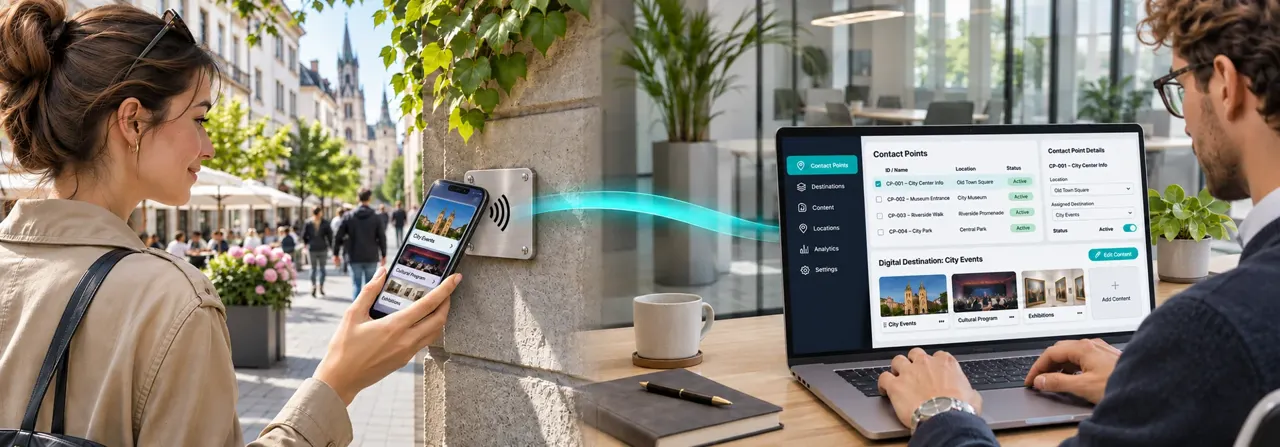
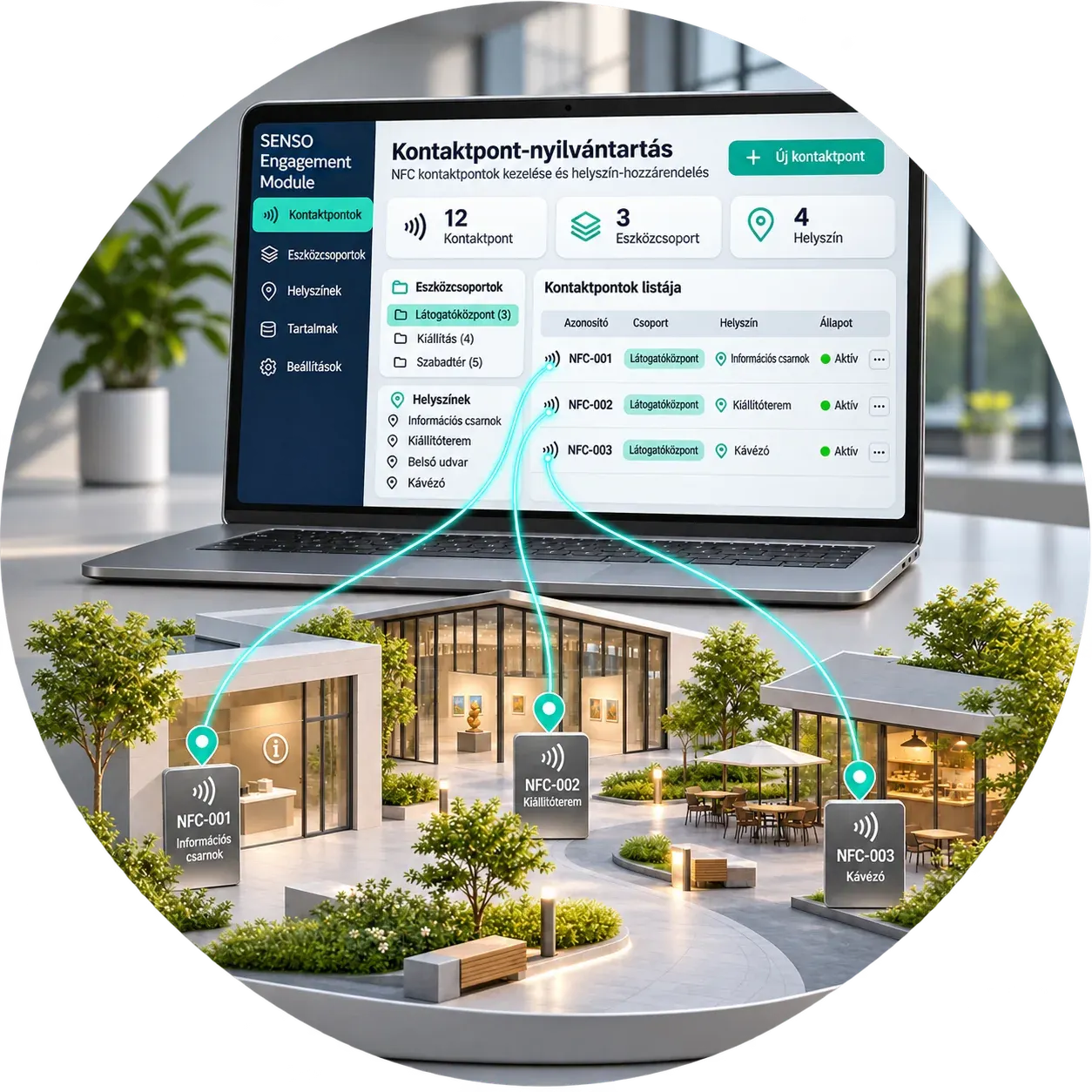
Individual points are identified and assigned to locations or tasks. The central structure keeps larger device fleets manageable.
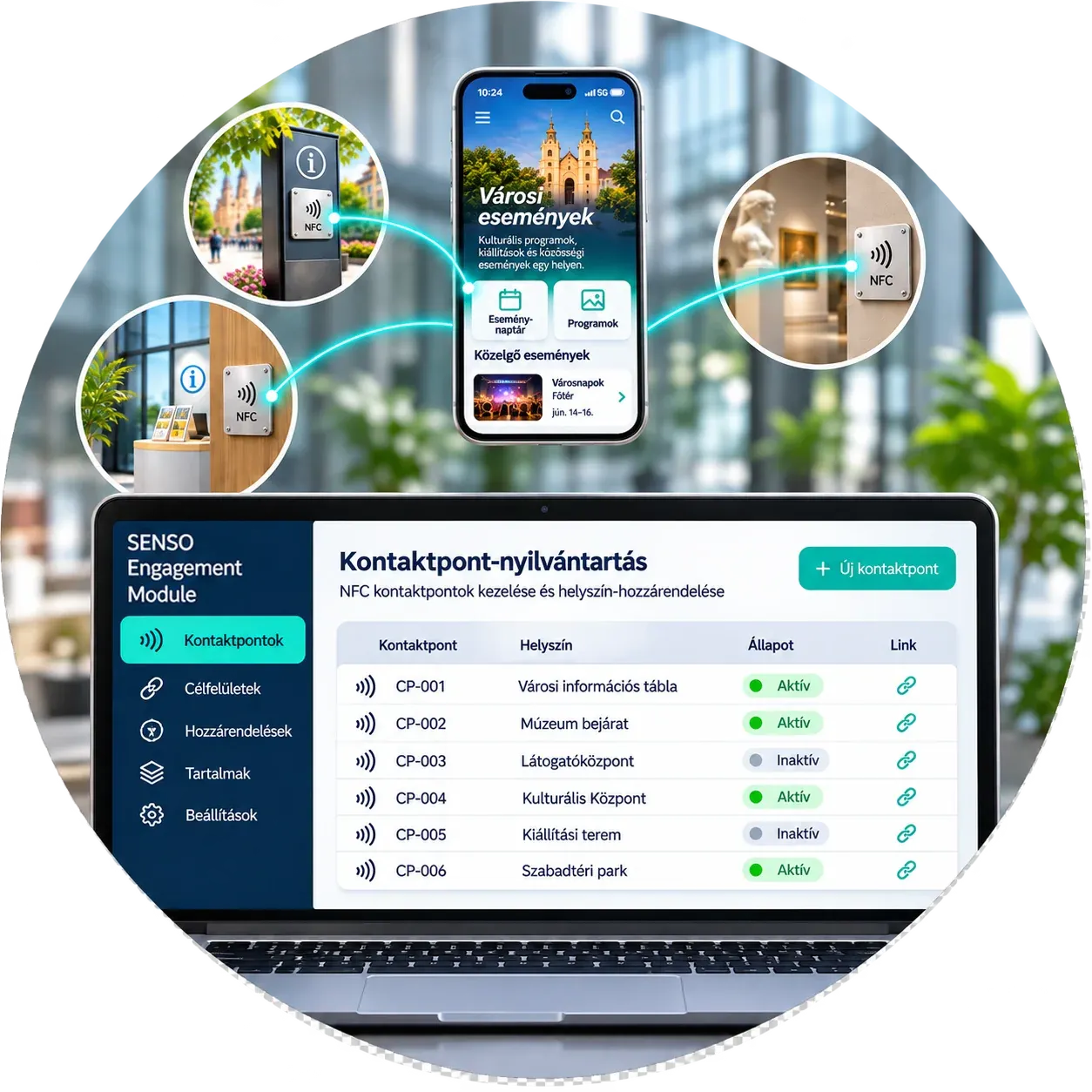
Each point can have its own destination, or several devices can open the same content: a web interface or suitable app connection.
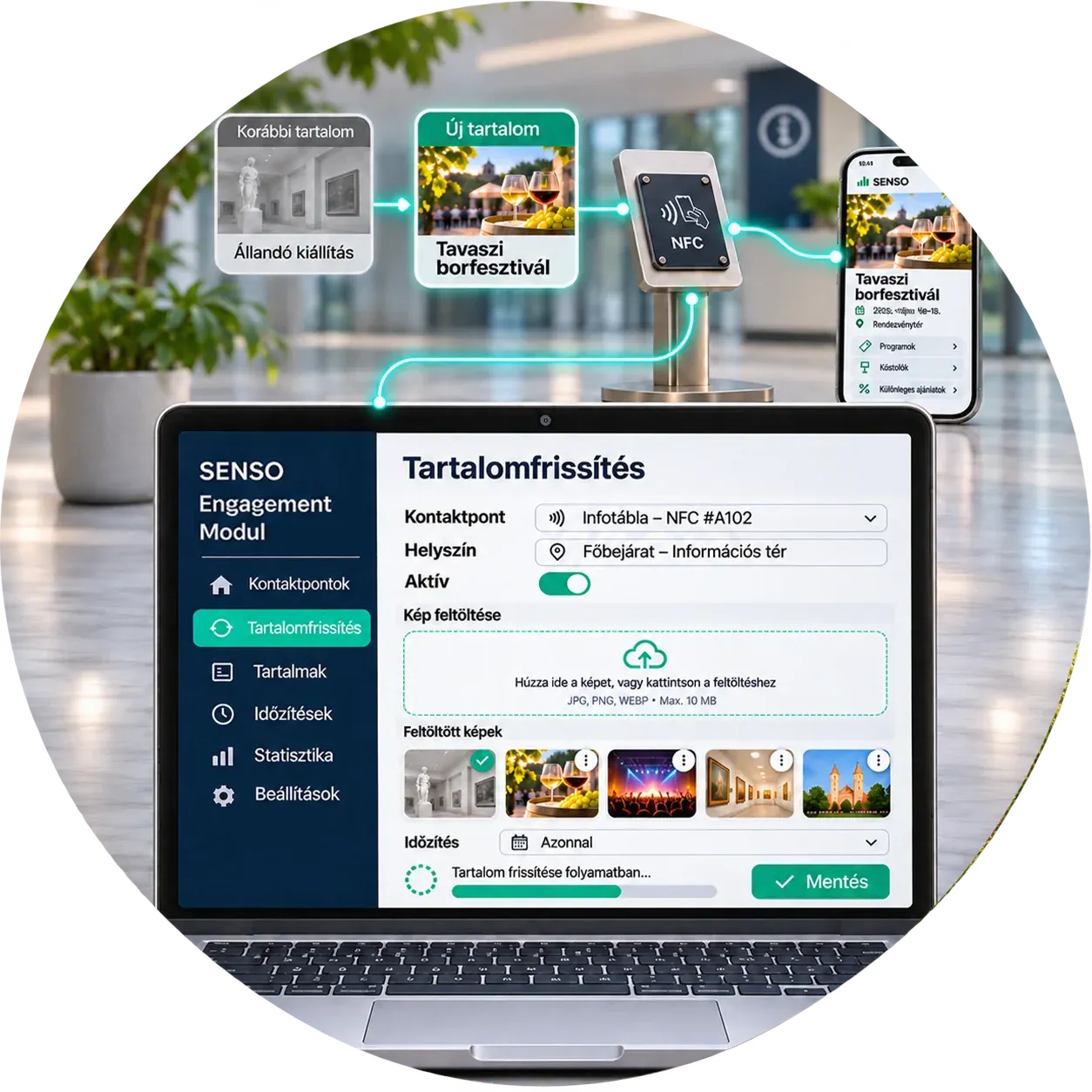
Assigned content updates centrally. A new announcement, offer or game gives an installed device a new function.
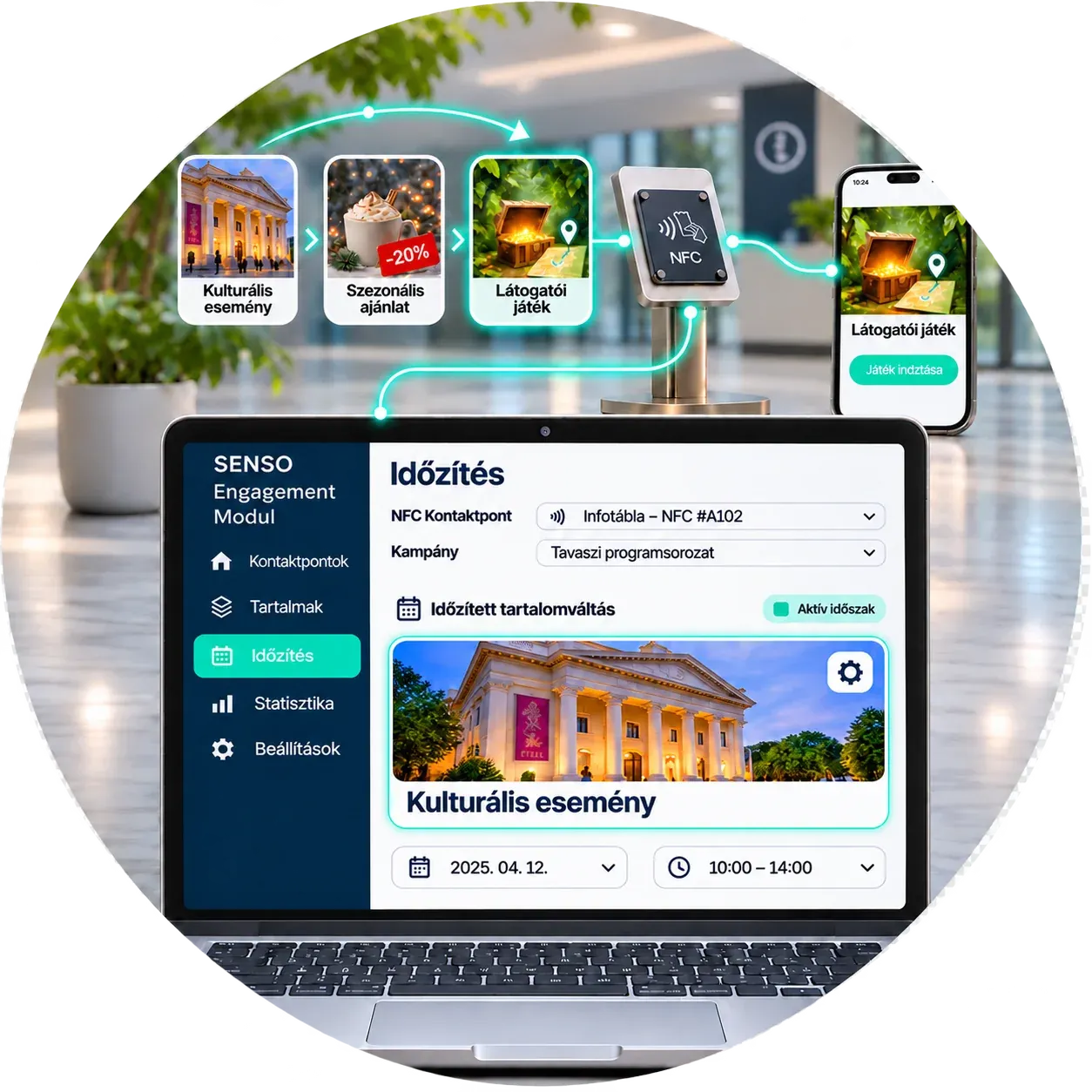
Changes are prepared in advance to match events or campaigns, coordinated with the destination interfaces.
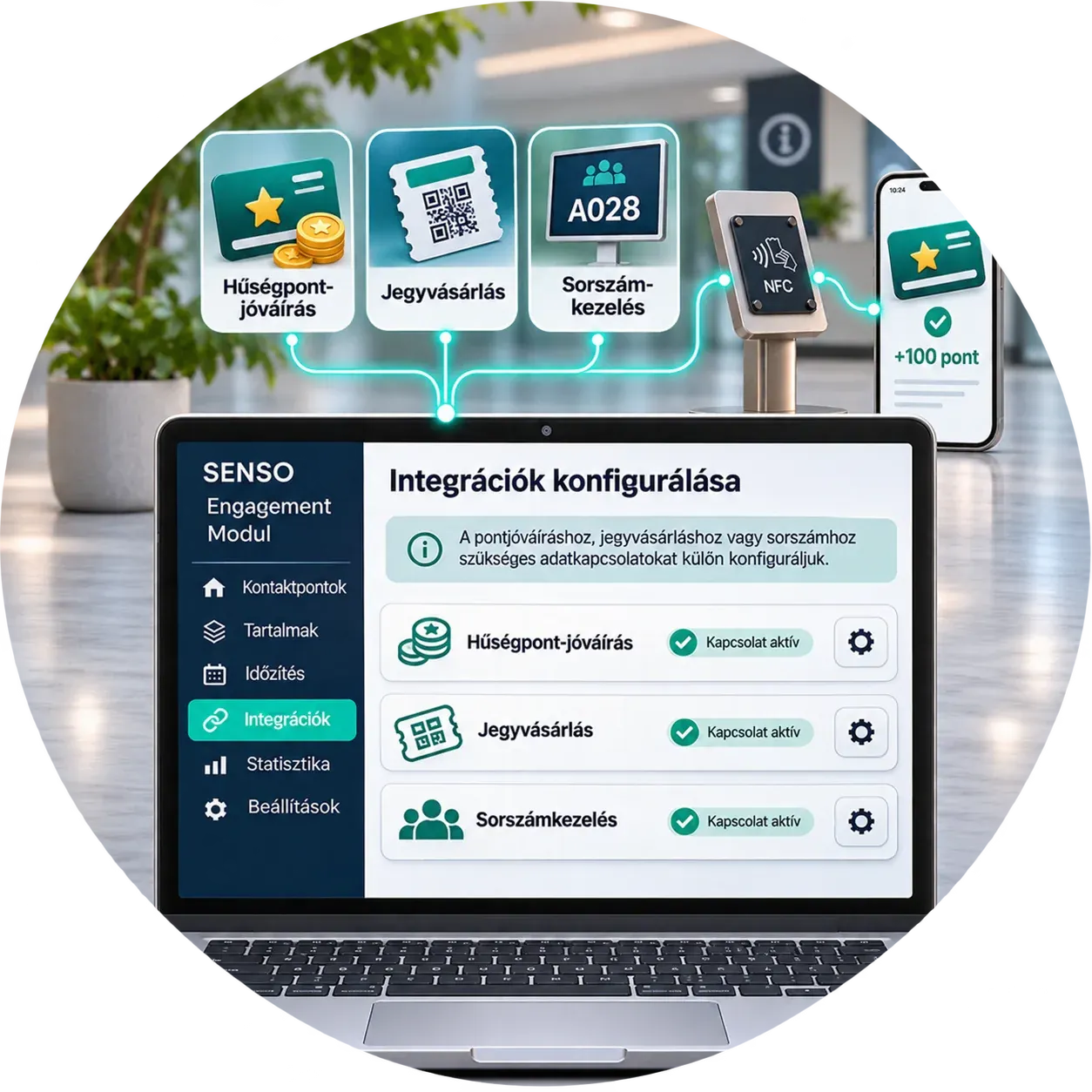
Connected applications and system destinations form part of the solution. Points awards, ticketing and queue data connections are configured separately.
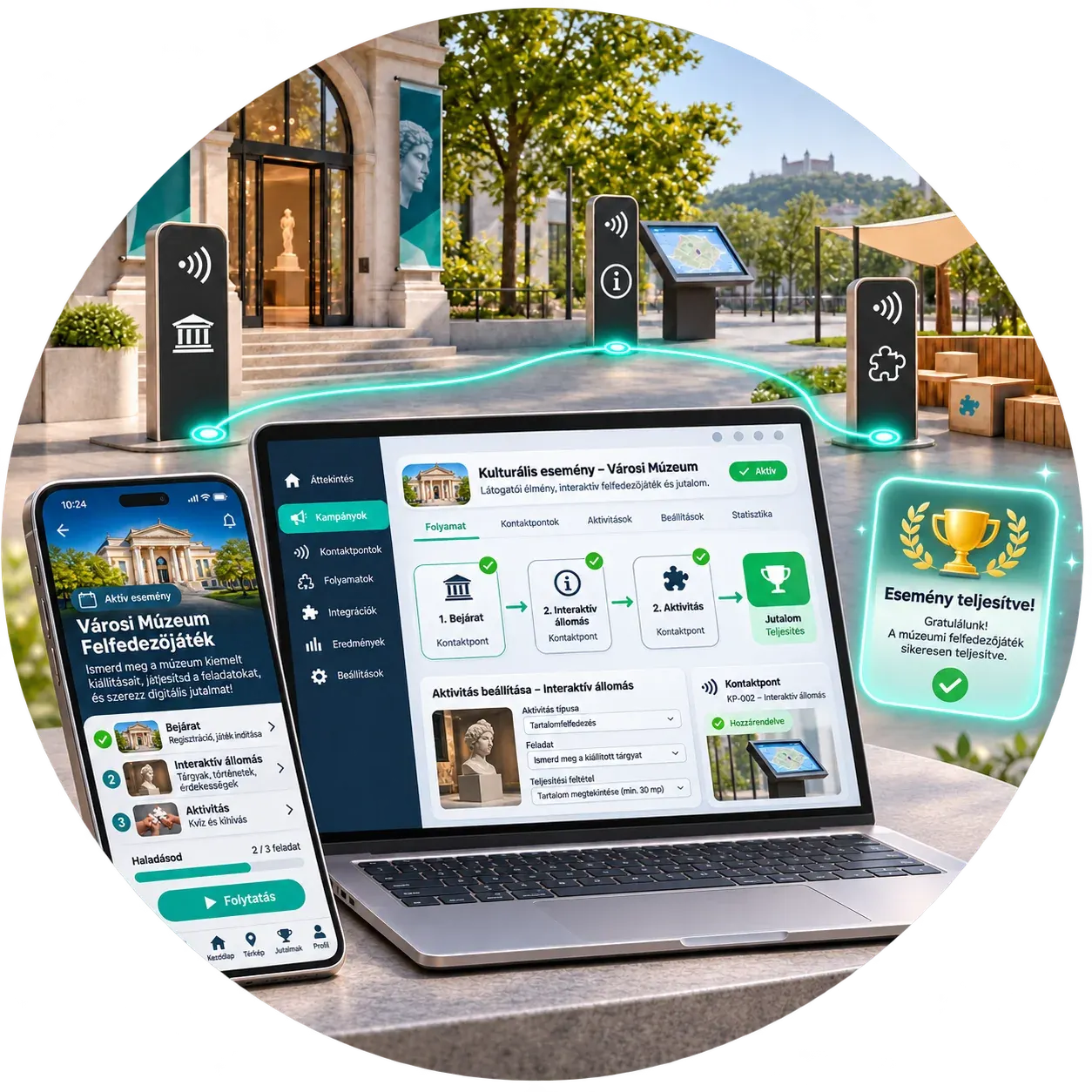
Operators organise touchpoints into activities. More complex linked actions are implemented jointly by the created interfaces and integrated systems.
The following connections can be configured according to partner requirements and the technical capabilities of existing infrastructure. Integrations are optional and are not automatically available in every installation.
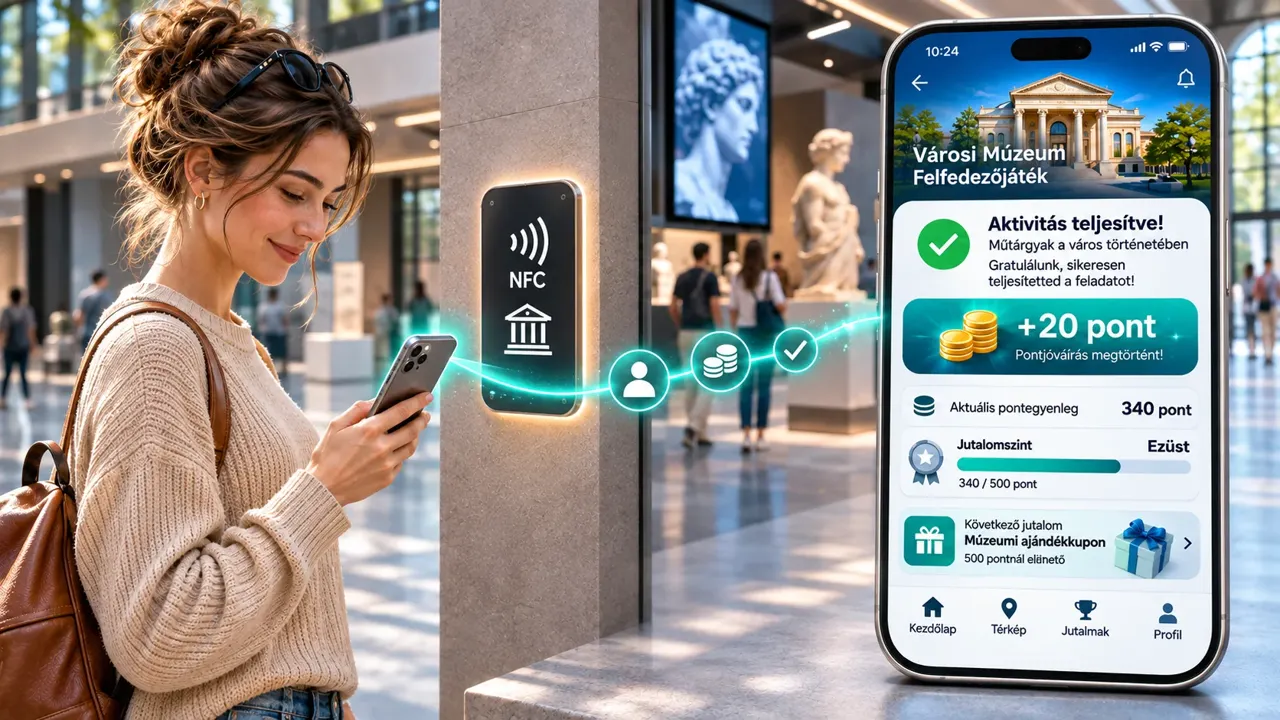
On-site interactions can link to an app function and identified person, enabling points collection under configured reward rules.
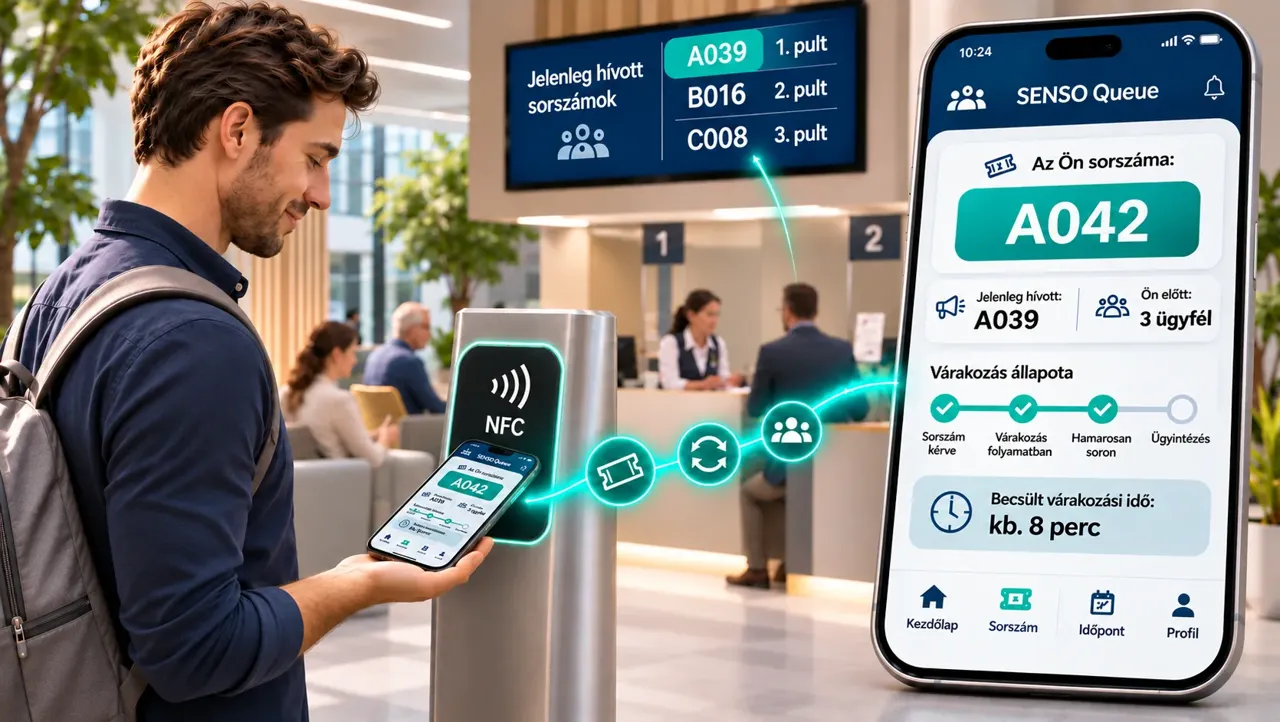
Touchpoints can open virtual queue tickets and mobile waiting information, following the venue’s queue management process.
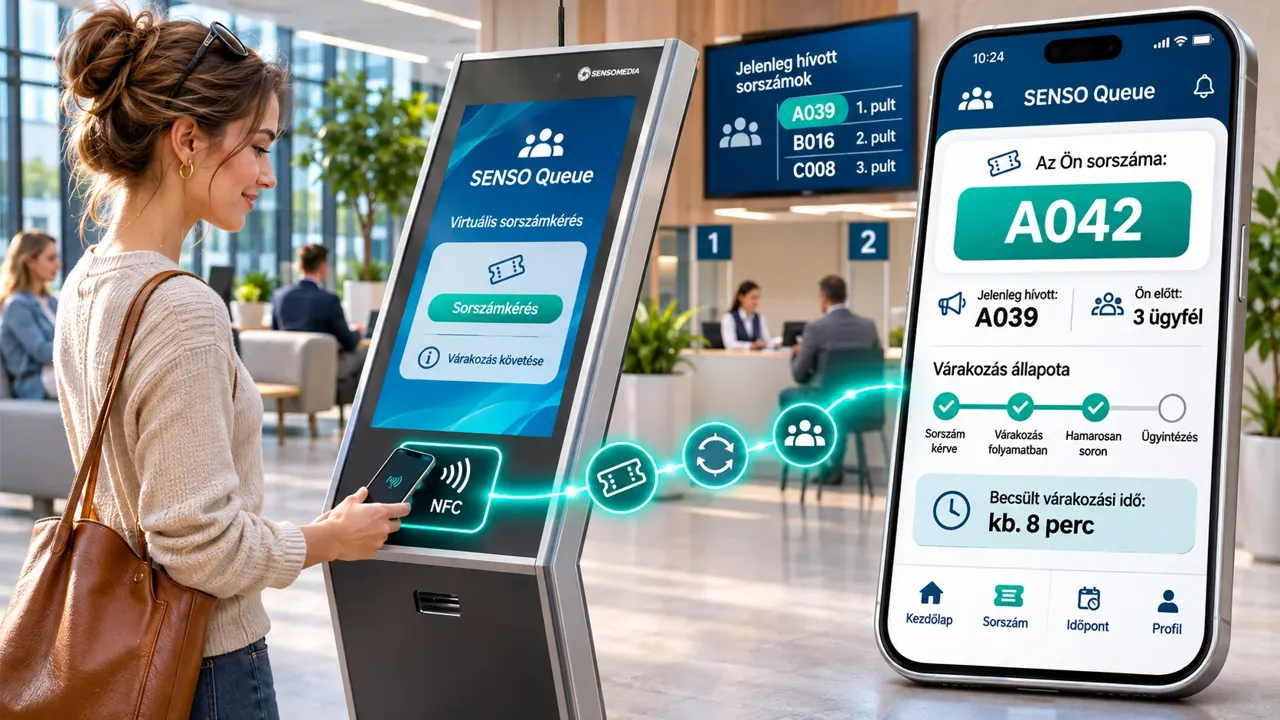
On-site information can continue on mobile, making the phone a personal information interface connected to the kiosk.
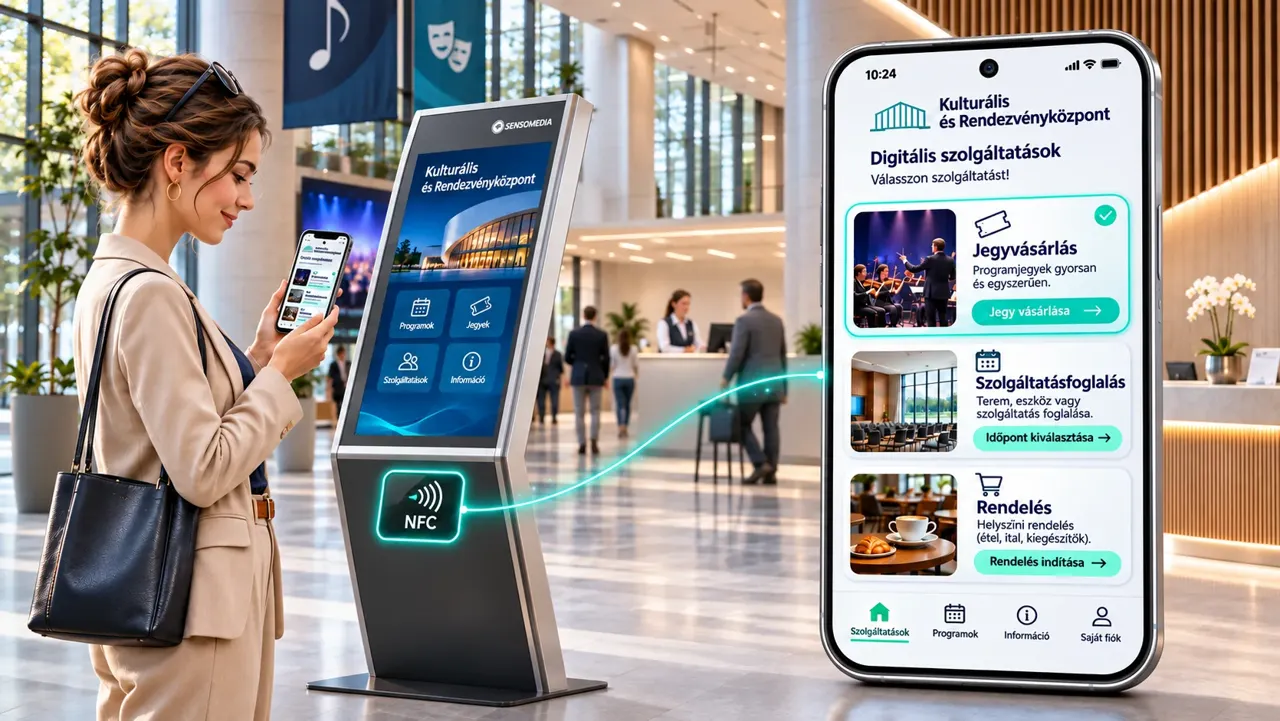
With suitable integration, touchpoints lead to purchases, service requests or orders. The connected sales back-end handles the transaction.
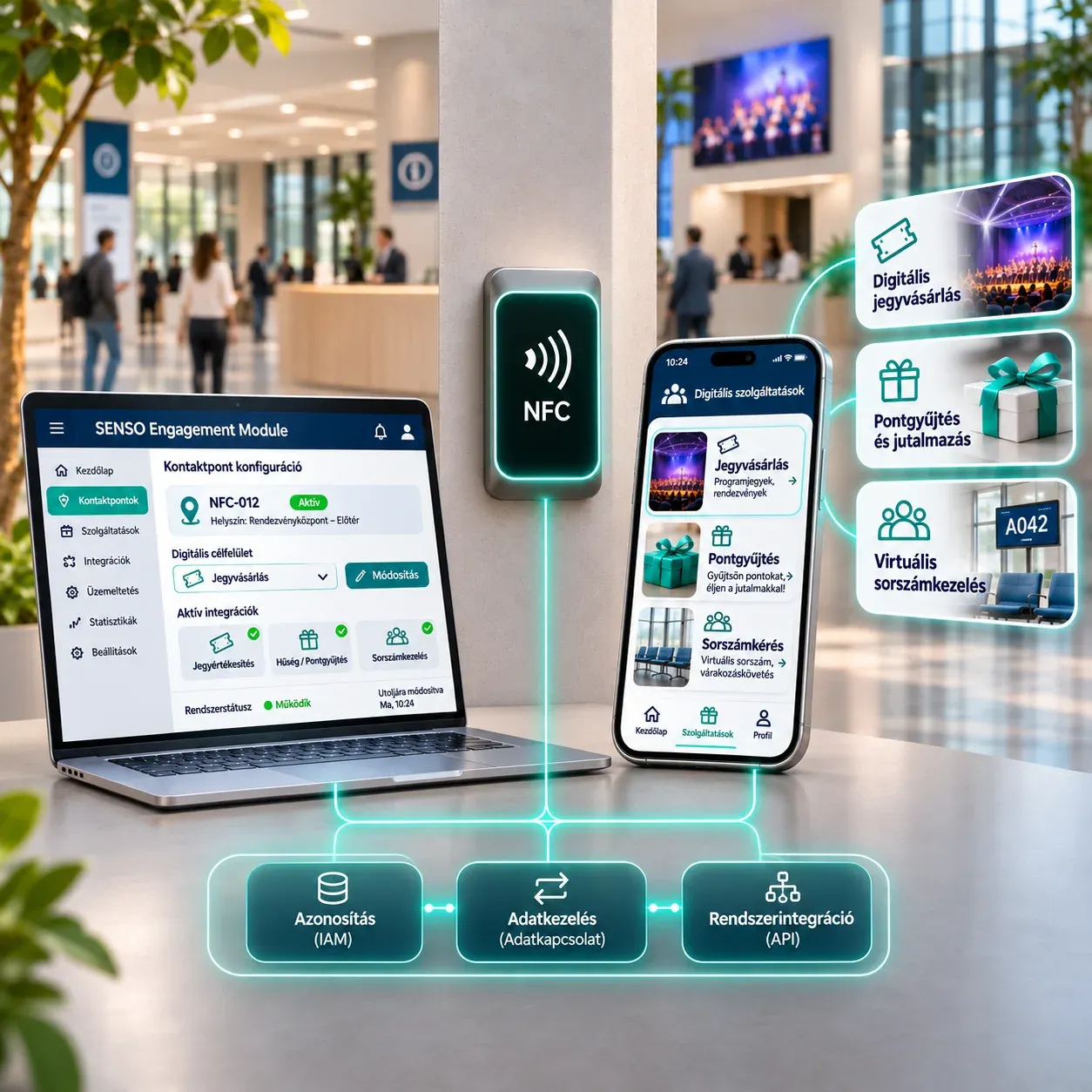
Digital destinations change centrally, allowing installed touchpoints to serve new services or campaigns without physical replacement.
Expansion involves more than changing a URL: new purchasing, loyalty or customer flow functions require planning of data management and identification in connected systems. Back-end connections complete the journey.
Long-term maintenance of touchpoints, destination interfaces and integrations is defined alongside the deployed services.
The solution uses compact, securely mounted and brand-customisable NFC touchpoints, deployed independently or beside other devices. Hardware running our other software can complement the solution.
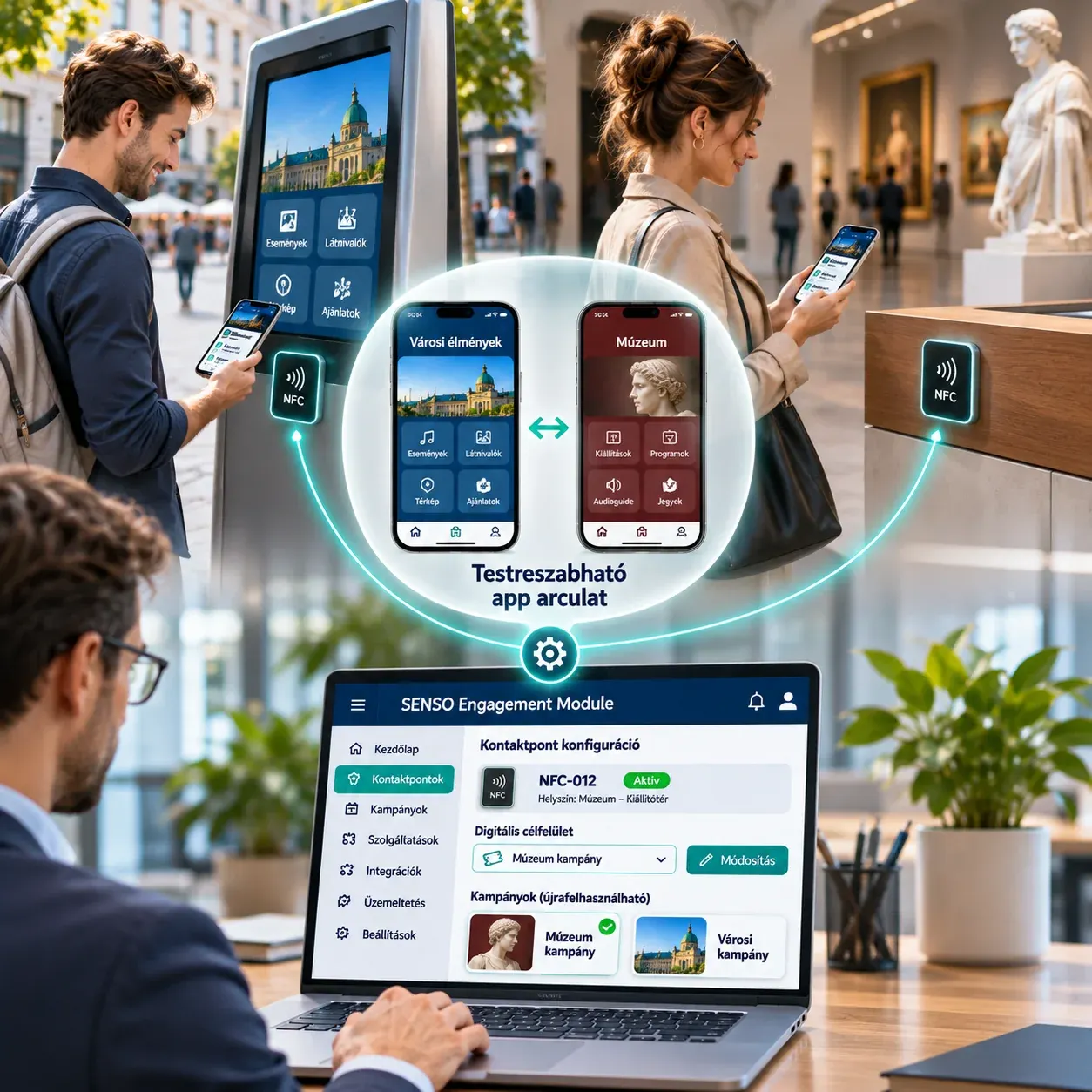
Information or services accessed at a kiosk can open on a phone through an NFC tap. The connection between touchpoint and Generic Info is adapted to the use case.
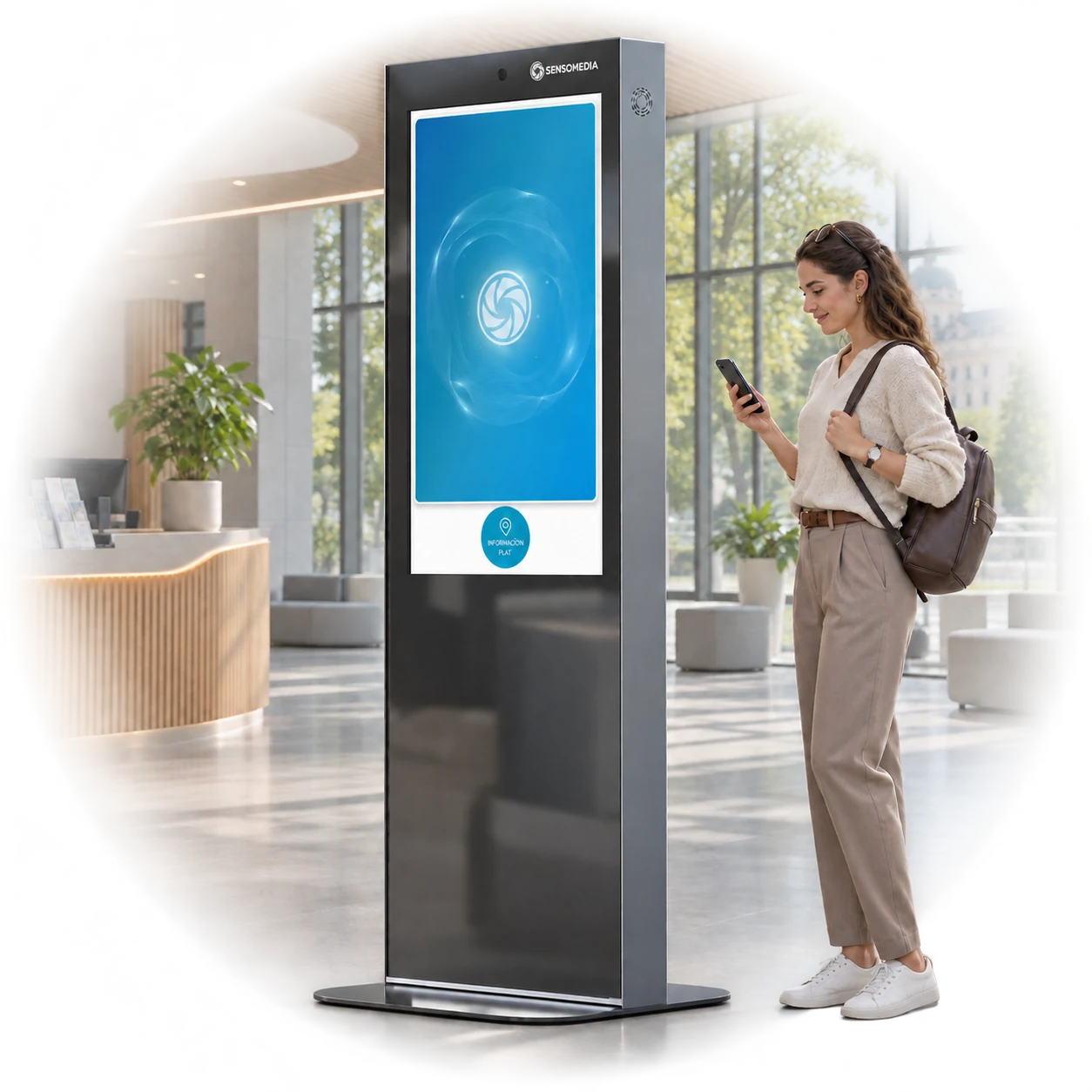
A touchpoint beside a terminal can open mobile information, coupons or related interfaces. This requires separate Engagement integration; it is not an automatic function of the payment NFC reader.
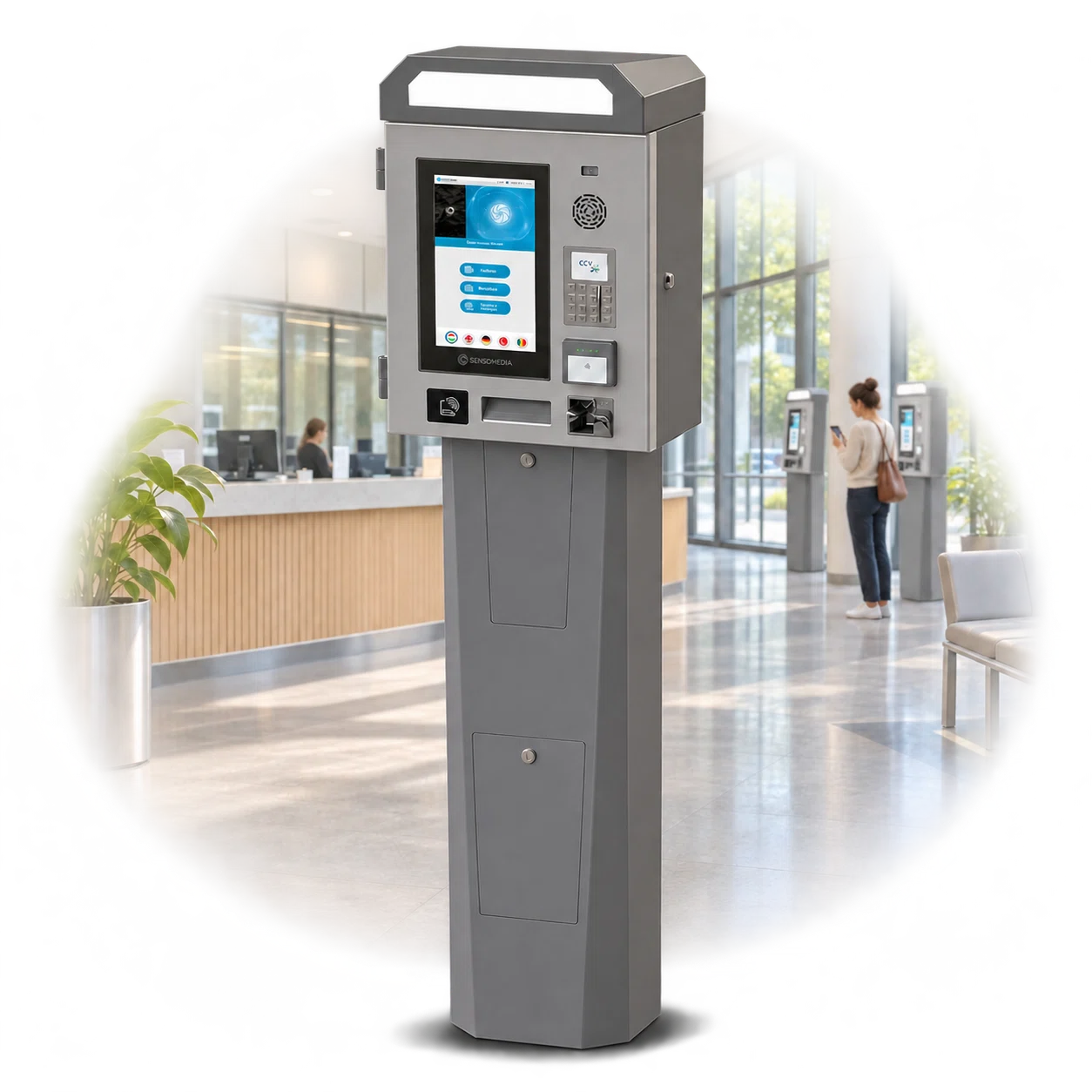
A touchpoint beside a display can offer a mobile experience linked to current communications. Campaign interface and display content management are coordinated during integration.