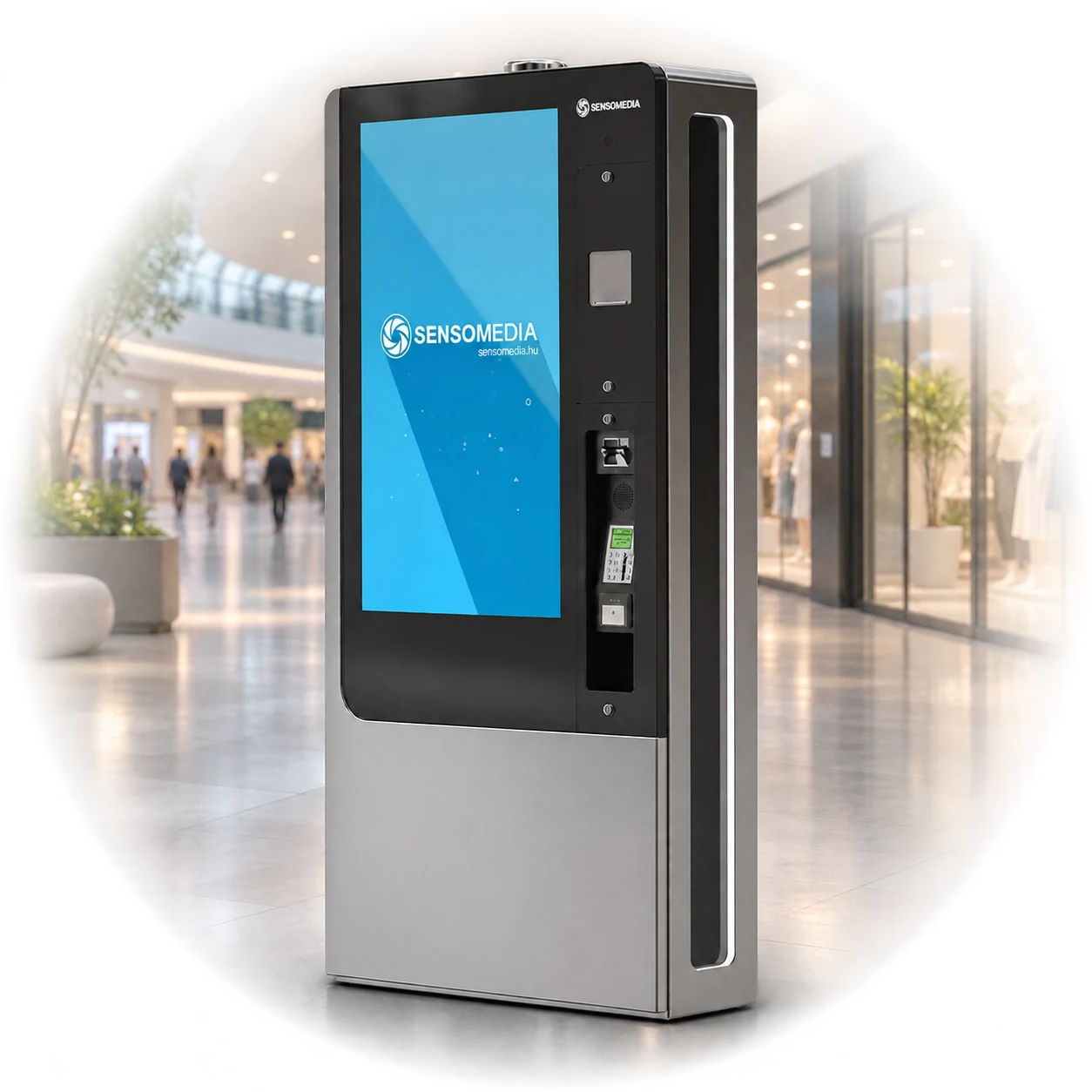
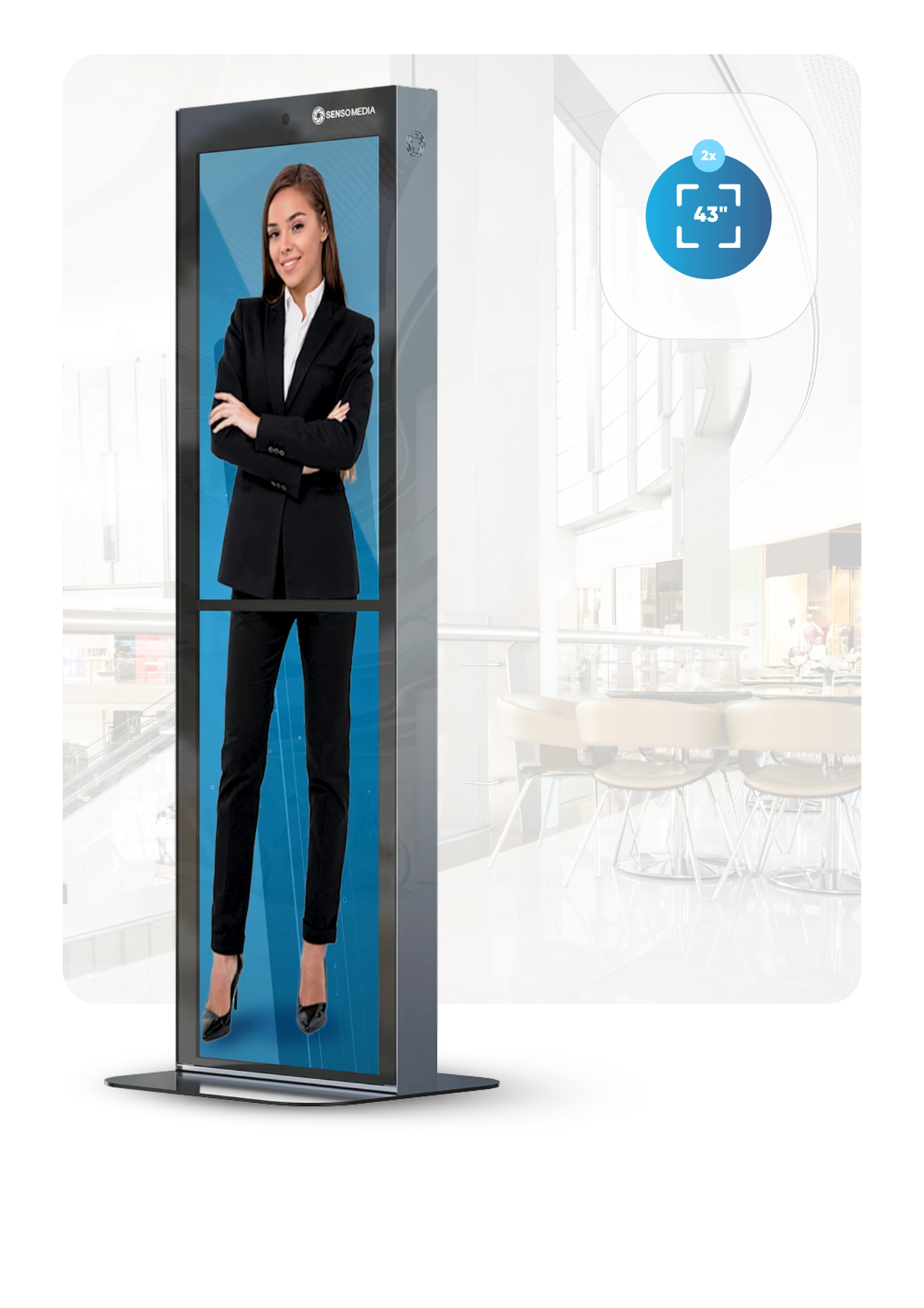
Device-side media player
The player shows assigned content and playlists according to central schedules. It serves standalone advertising displays or operates within another kiosk application.
 Let’s talk!
Manage content across the entire display network from one interface
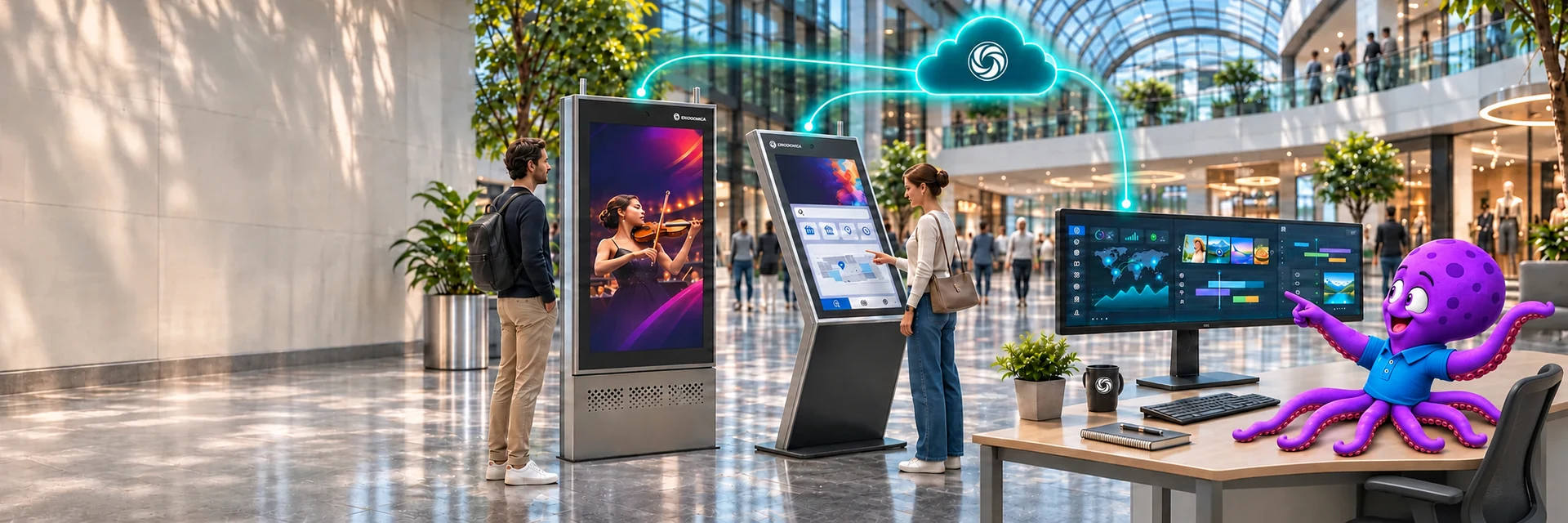
SENSO Digital Signage combines a central online content manager with media players running on devices. It manages any number of network-connected digital displays from one place, individually or in custom groups.
Images, videos and other supported media are arranged in editable playlists, updated in real time or scheduled in advance. The system supports multi-location advertising, local offers and public information while reducing device-by-device updates.
The media player works on standalone advertising displays or within other SENSO kiosk software. Optional programmatic integration adds auction-based impressions alongside directly sold advertising, creating additional revenue opportunities for network operators.
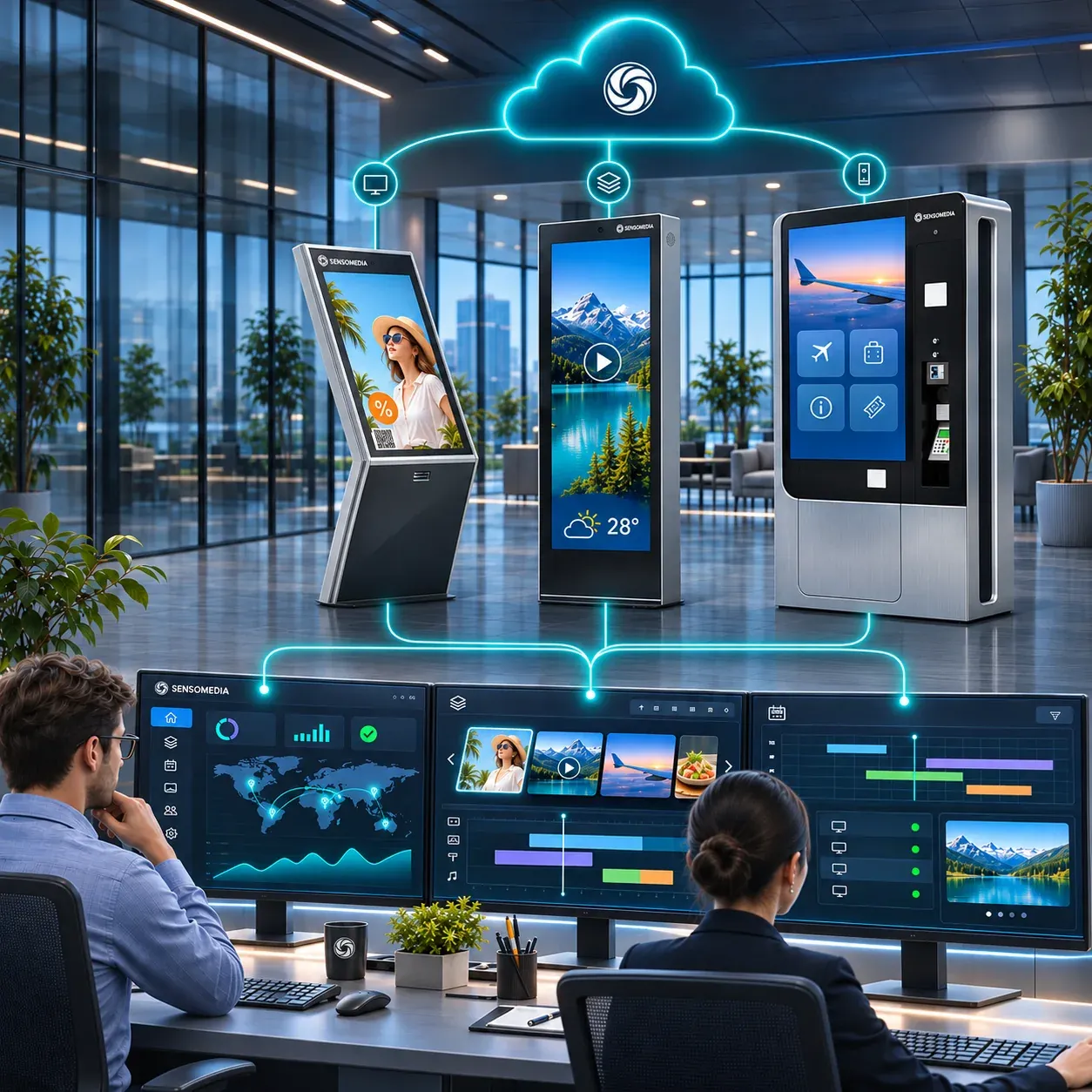
SENSO Digital Signage provides a unified environment from content preparation to playback. Network structure and content assignment follow the partner’s communication and business objectives.

Displays, kiosks and payment terminals across multiple sites are updated through one online interface.

Current offers and important announcements are published remotely on selected displays.

Kiosks and payment terminals show media in a designated area during use and full-screen when idle.
Optional programmatic connections enable auction-based sales of predefined advertising slots alongside direct partner campaigns.

Displays can be grouped by location, region, device type or other criteria for targeted updates.

Scheduling prepares content changes and aligns playback with site operations or current events.

Where technical requirements are met, third-party displays and kiosks can connect to the same content manager.
The solution’s two core components are the central content manager and device-side media player. Together, they ensure the right content appears on the selected display at the intended time.
The player shows assigned content and playlists according to central schedules. It serves standalone advertising displays or operates within another kiosk application.
A browser-based interface for uploading and organising media, building playlists and managing devices. Content is assigned to individual displays or groups for immediate or scheduled publication.
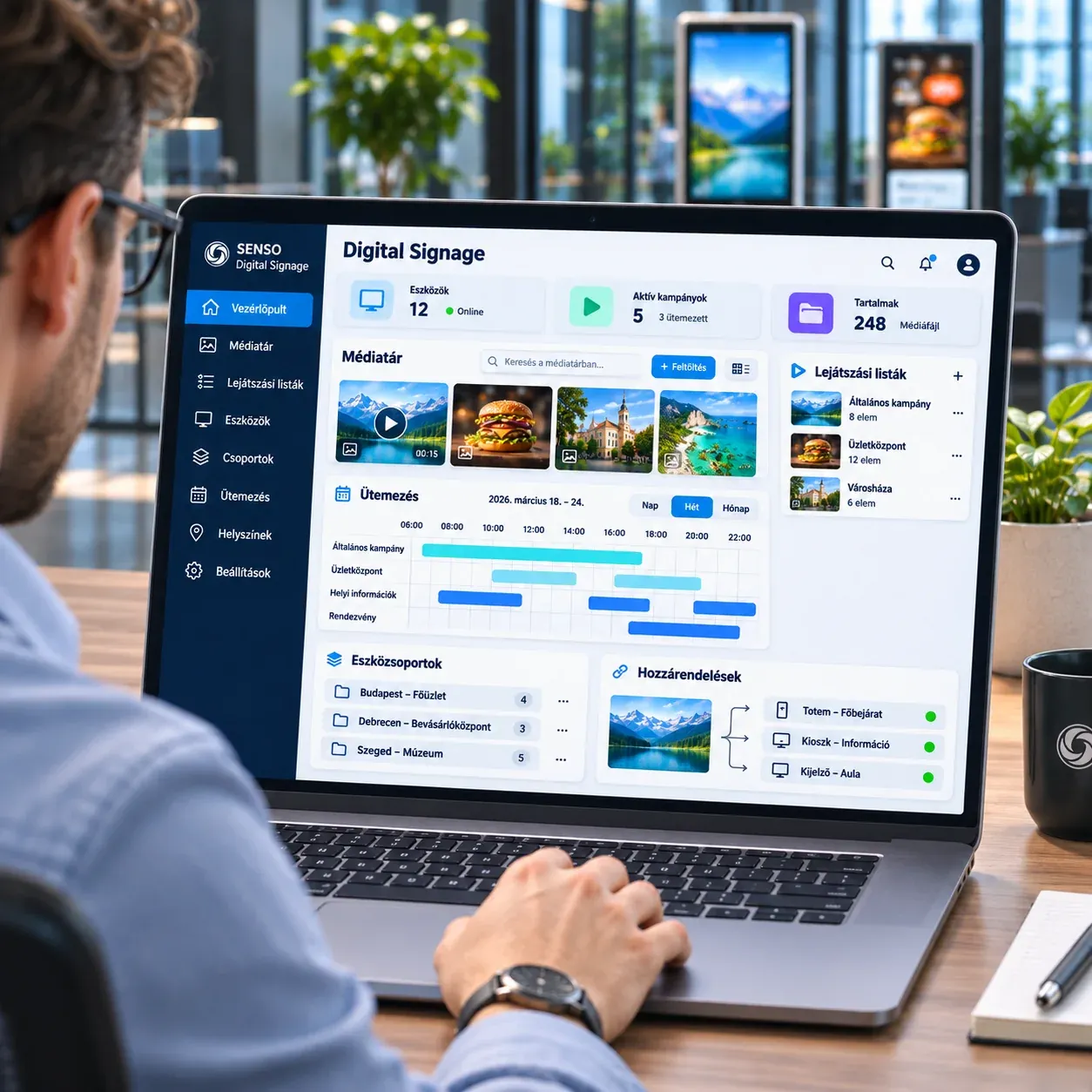
We adapt deployment to existing infrastructure, communication tasks and the intended use of advertising space.
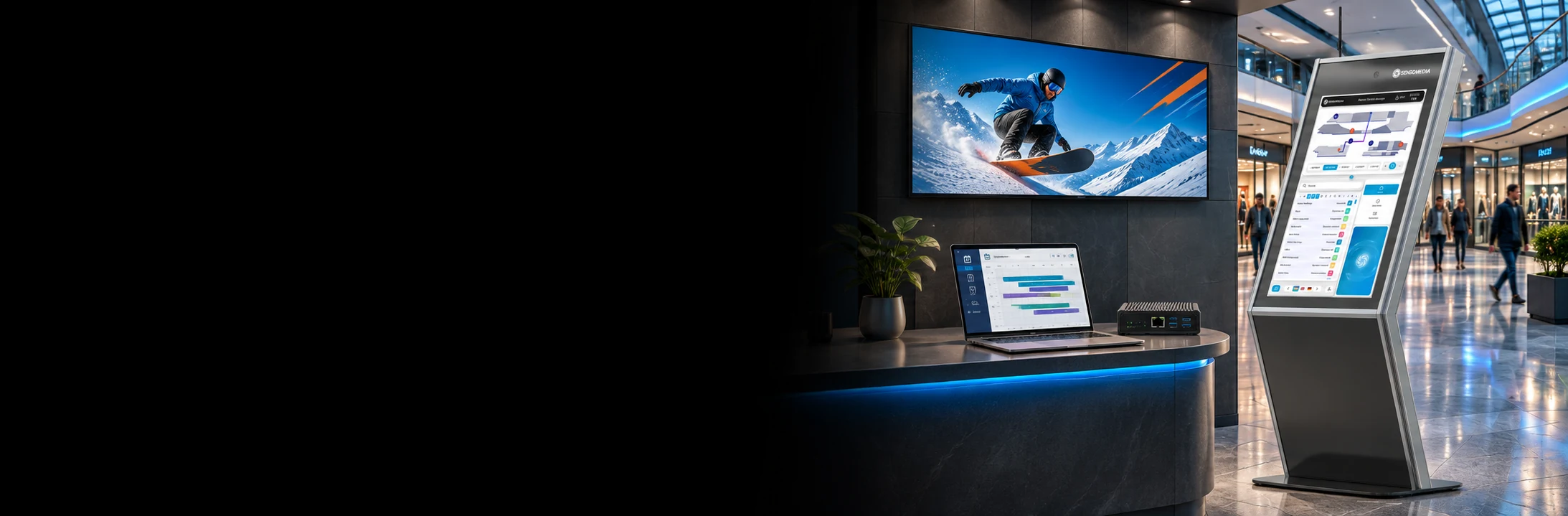
We assess displays, controllers and on-site applications, establish the connection between players and central content management, and coordinate kiosk media with the device’s primary functions.

Layouts follow display size, orientation and partner branding. On interactive devices, advertising position and behaviour are designed alongside the user interface.

Where required, we establish provider connections and internal auction management. We define auctionable slots, available periods and a shared playback schedule for direct campaigns and programmatic content.
The media player presents centrally prepared content, adapting to standalone advertising displays or interactive kiosks.
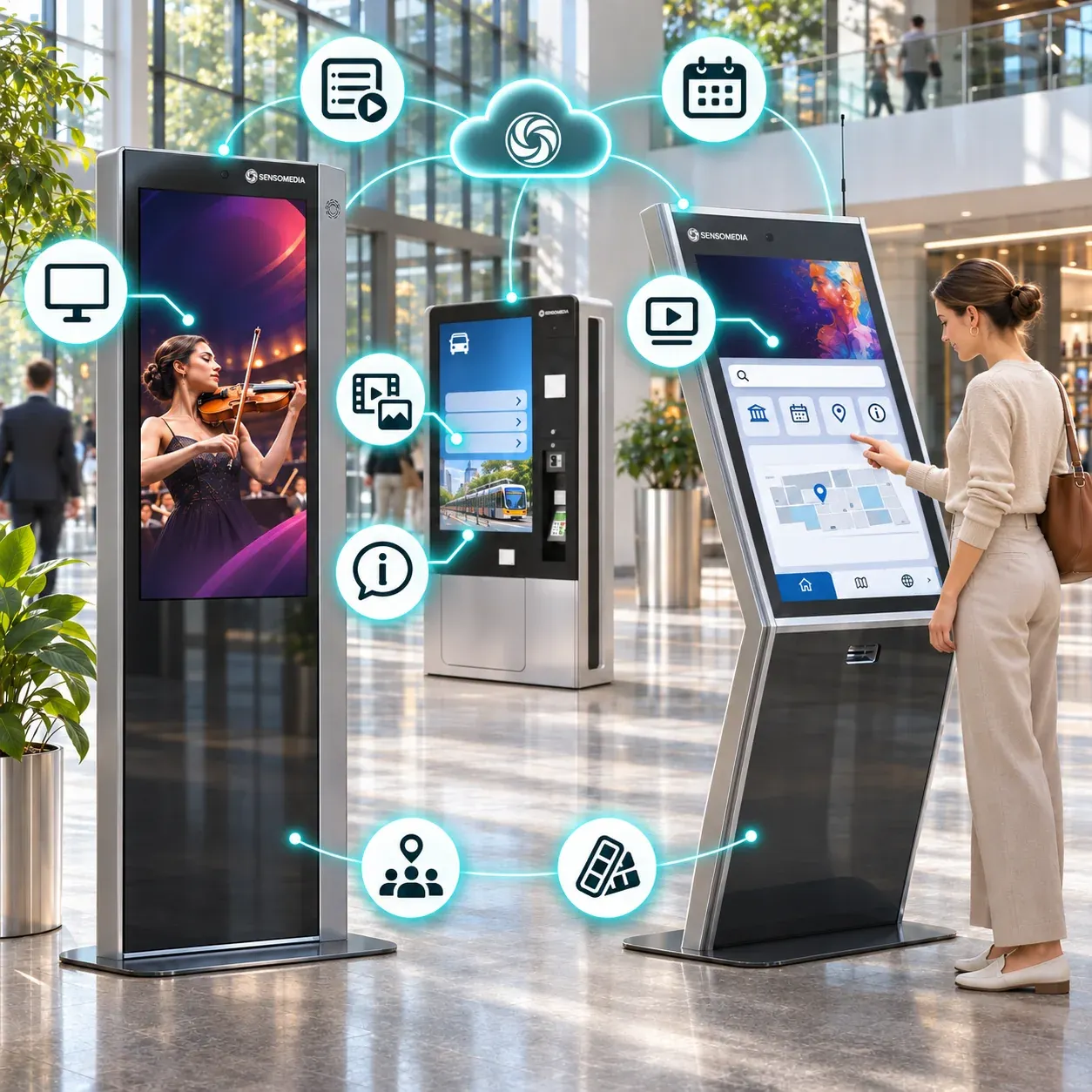
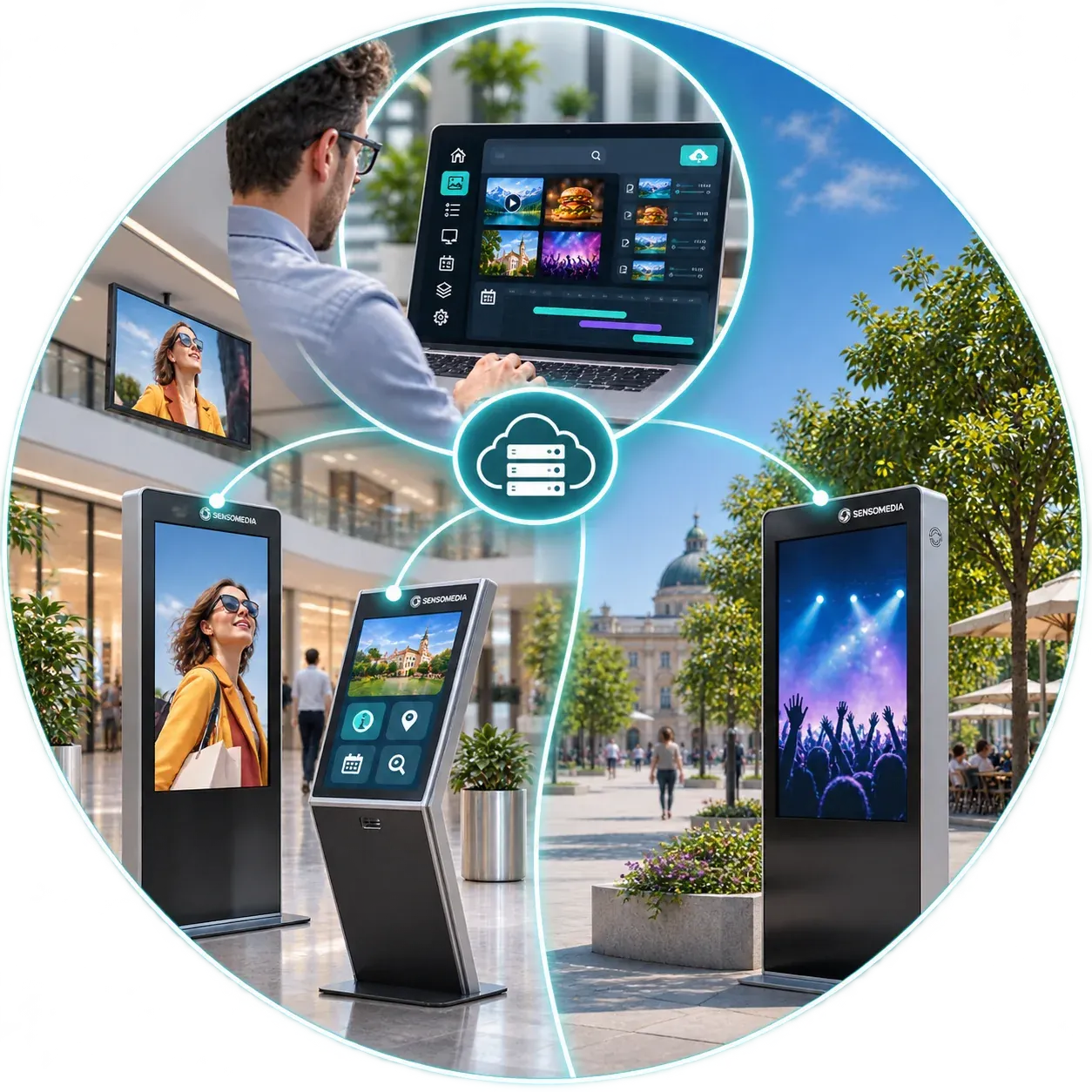
Assigned images, videos and other supported content appear in the specified arrangement. Advertising, local information and public announcements can alternate on one device.
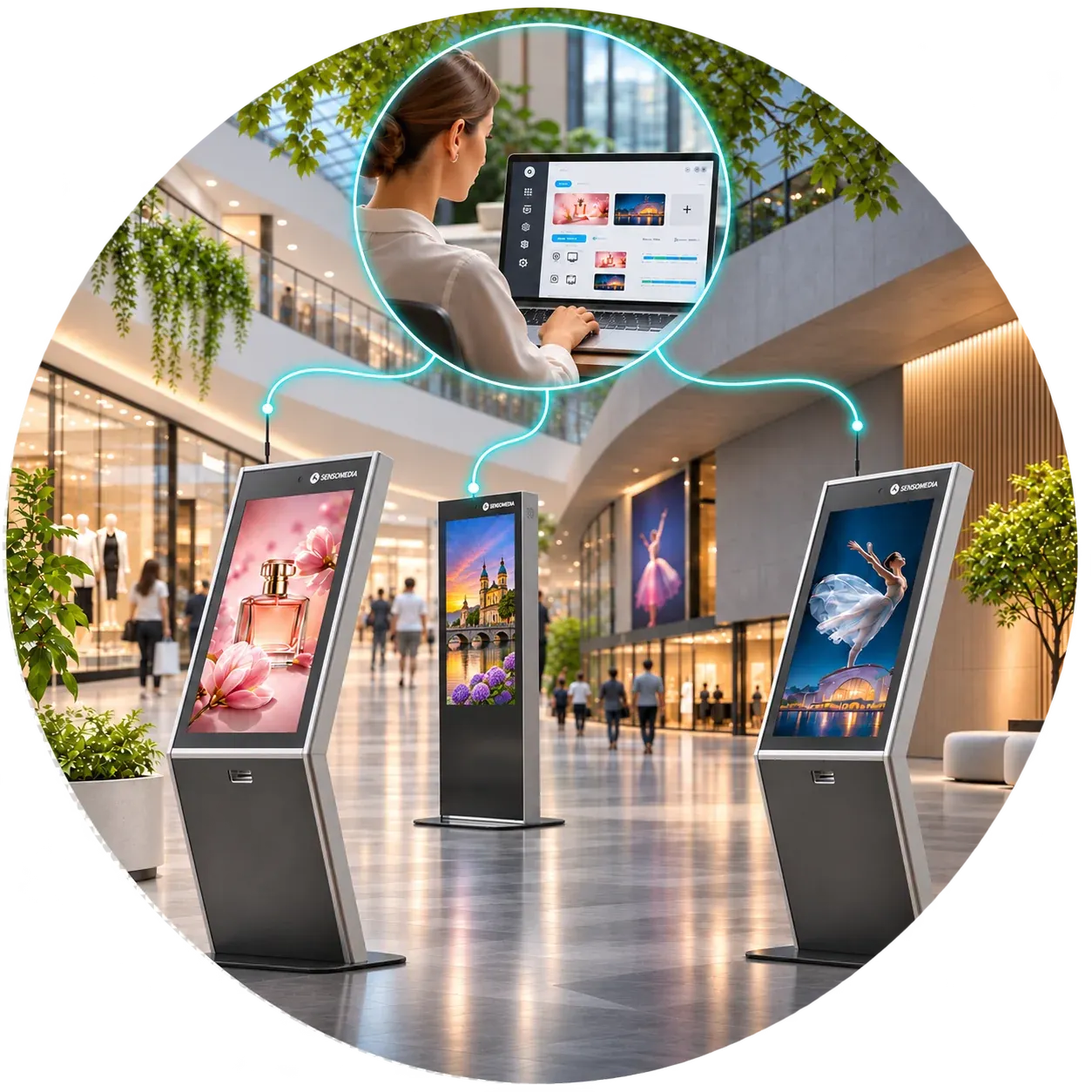
The player follows centrally prepared playlists. Sequence and content selection can match campaign or local communication goals.
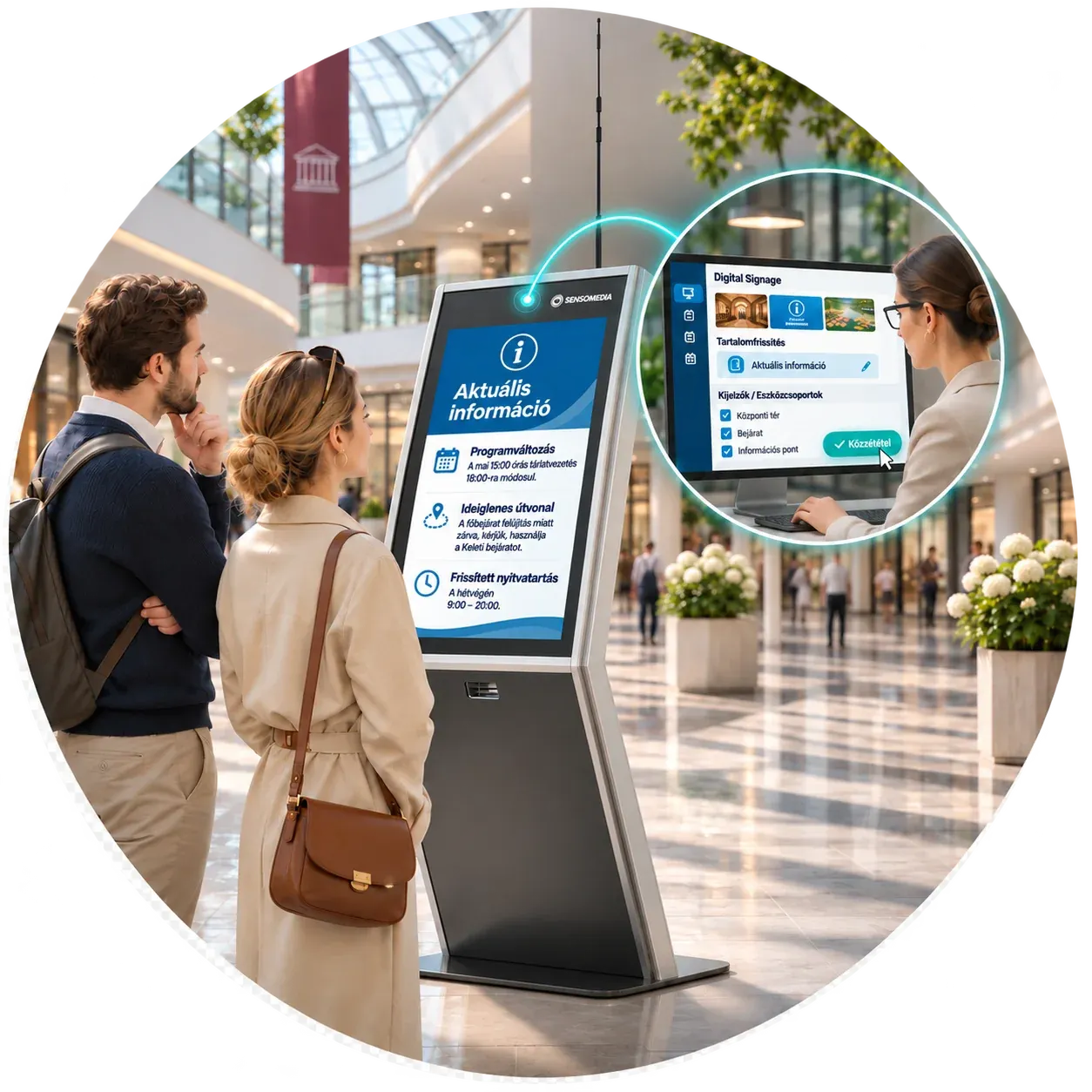
Playback follows central changes and predefined schedules, enabling campaign transitions and current information without on-site intervention.
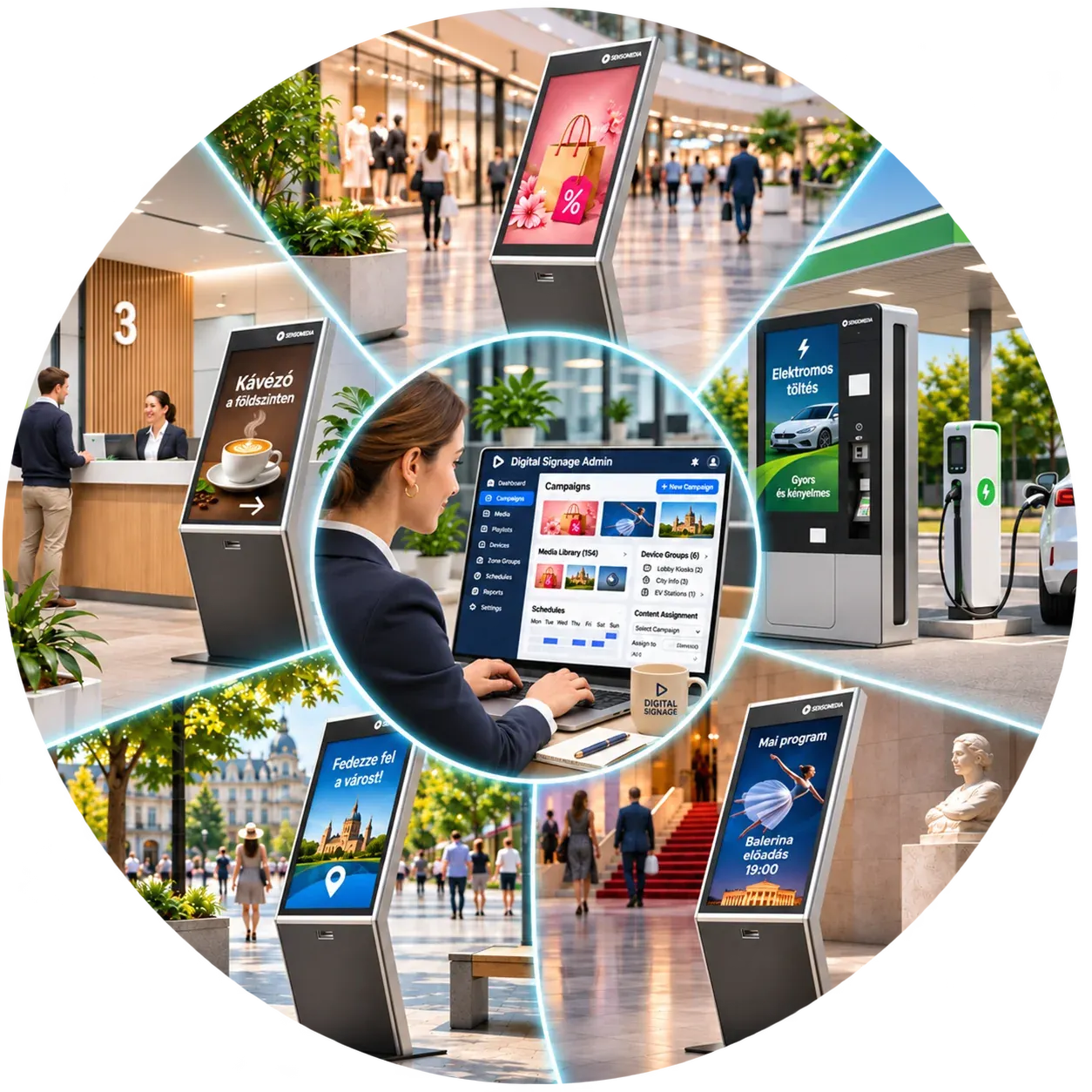
Individual displays and groups can receive different playlists. National campaigns and local offers can coexist within the same network.
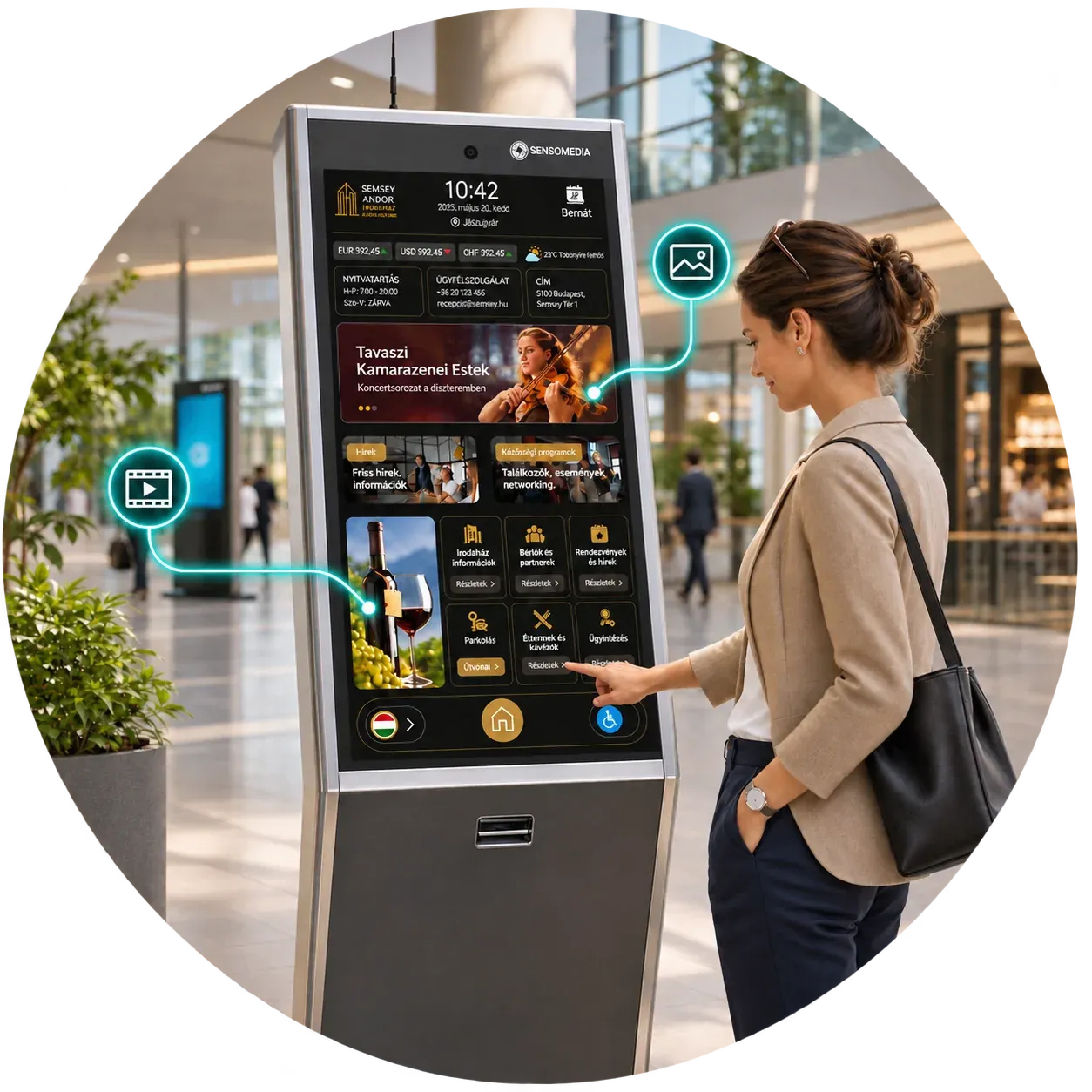
During kiosk or payment terminal use, media run in a dedicated interface area, continuing communications throughout customer service.
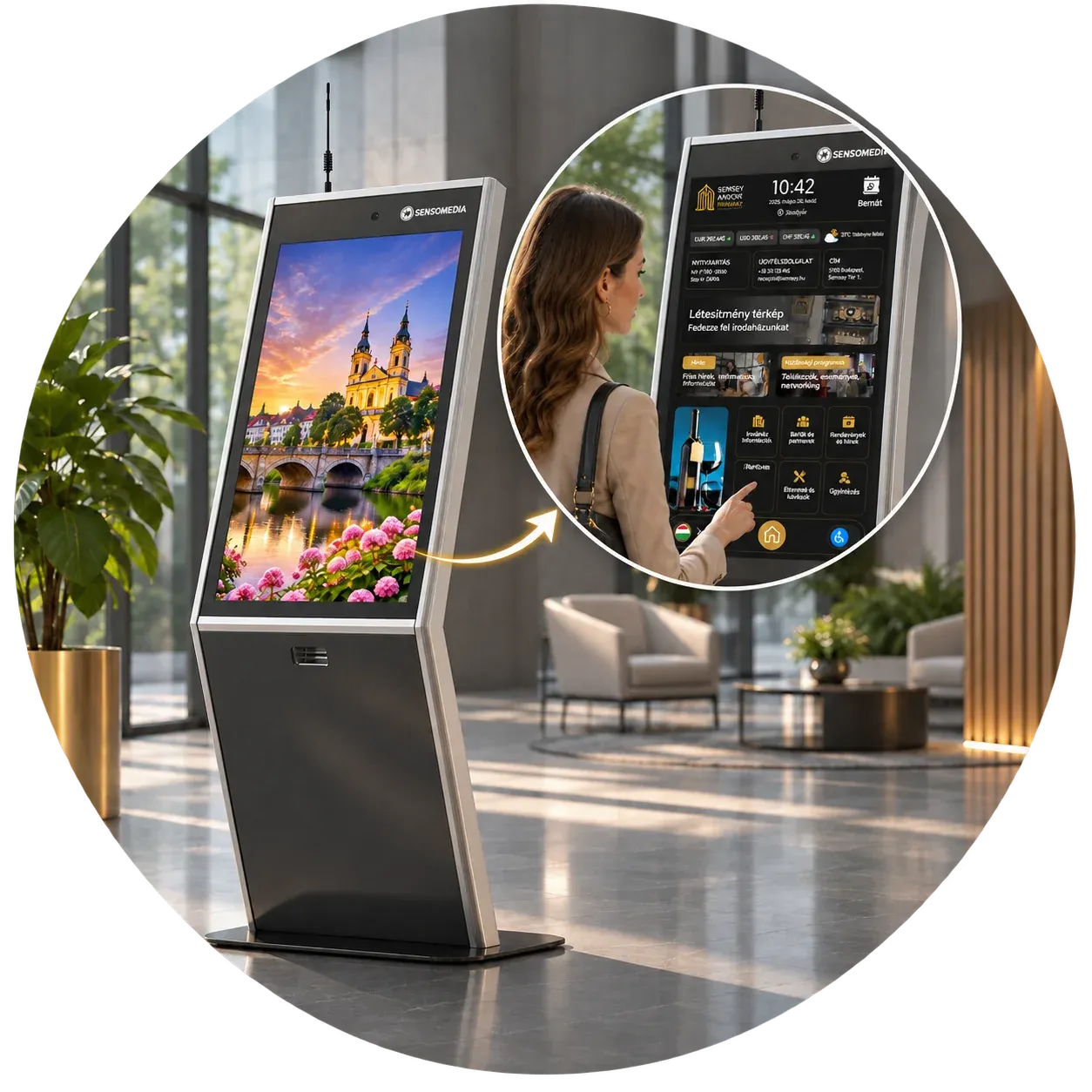
When the kiosk is idle, content can fill the screen. A new interaction restores playback to the application’s interface layout.
The central back-end prepares media, edits playlists and selects display locations. Operators can organise communications for one screen or a multi-site network.
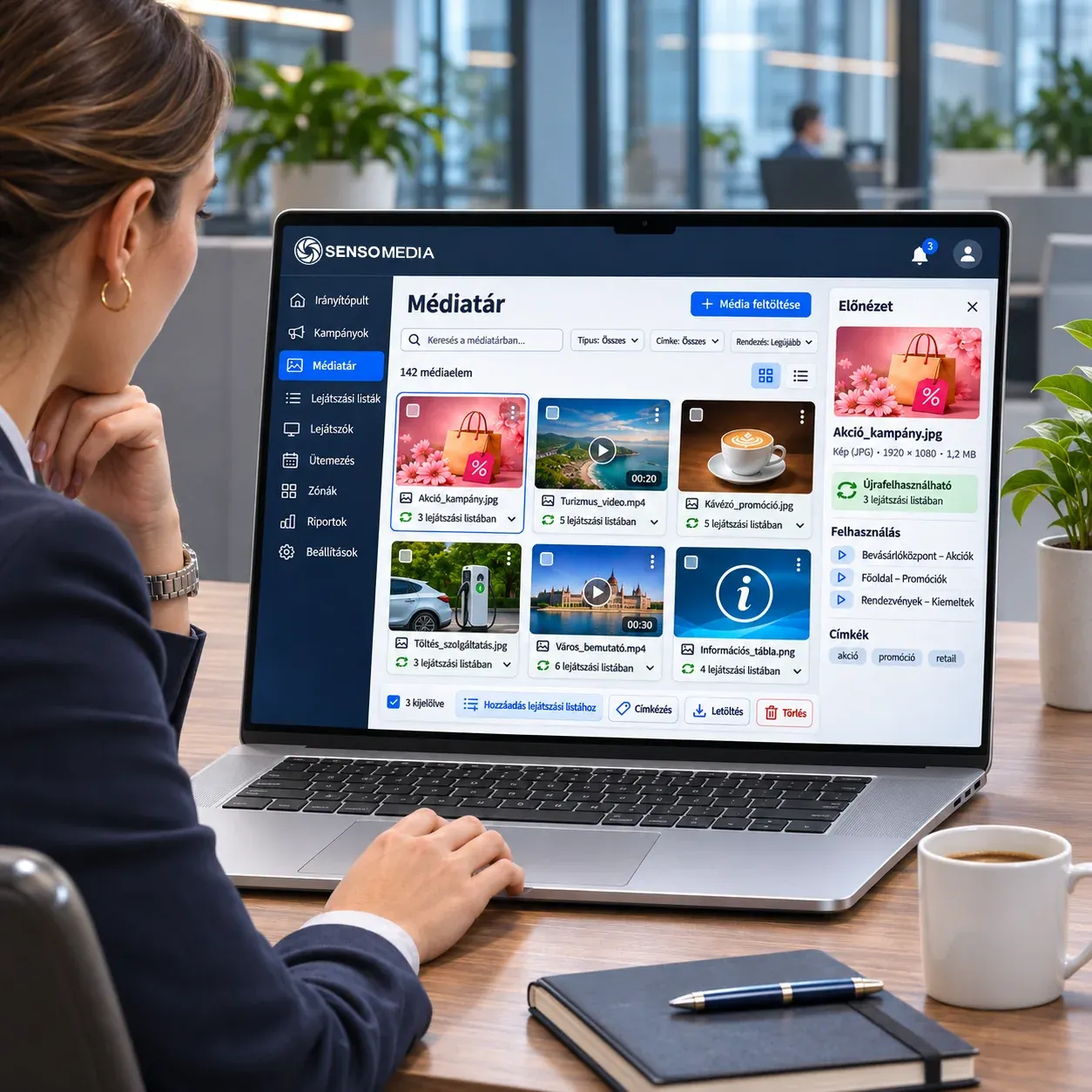
Images, videos and other supported files are uploaded and organised in one place. The same content can be reused in several playlists and locations.
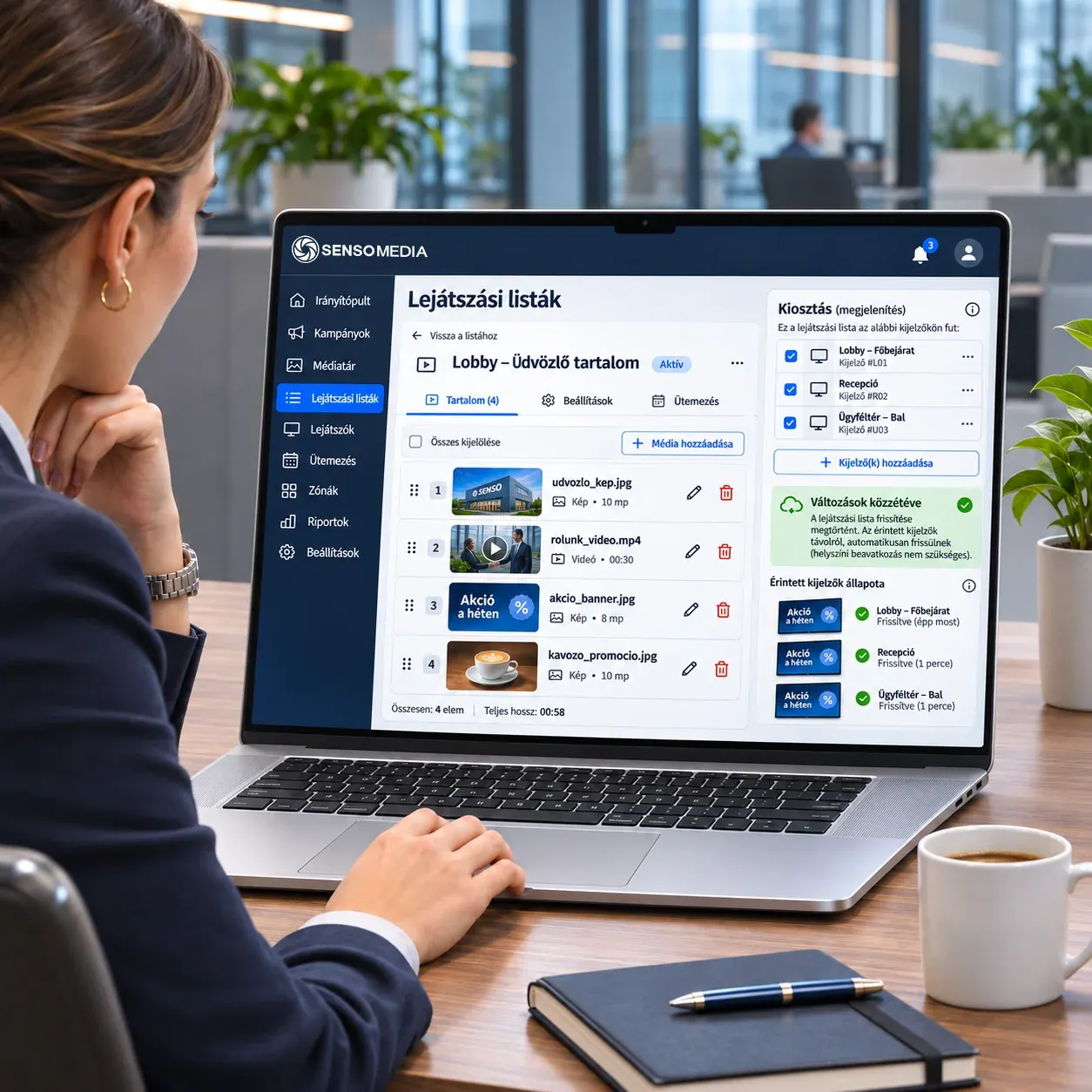
Media are arranged in the desired order and updated for current campaigns. Playlists plan both owned communications and partner advertising.
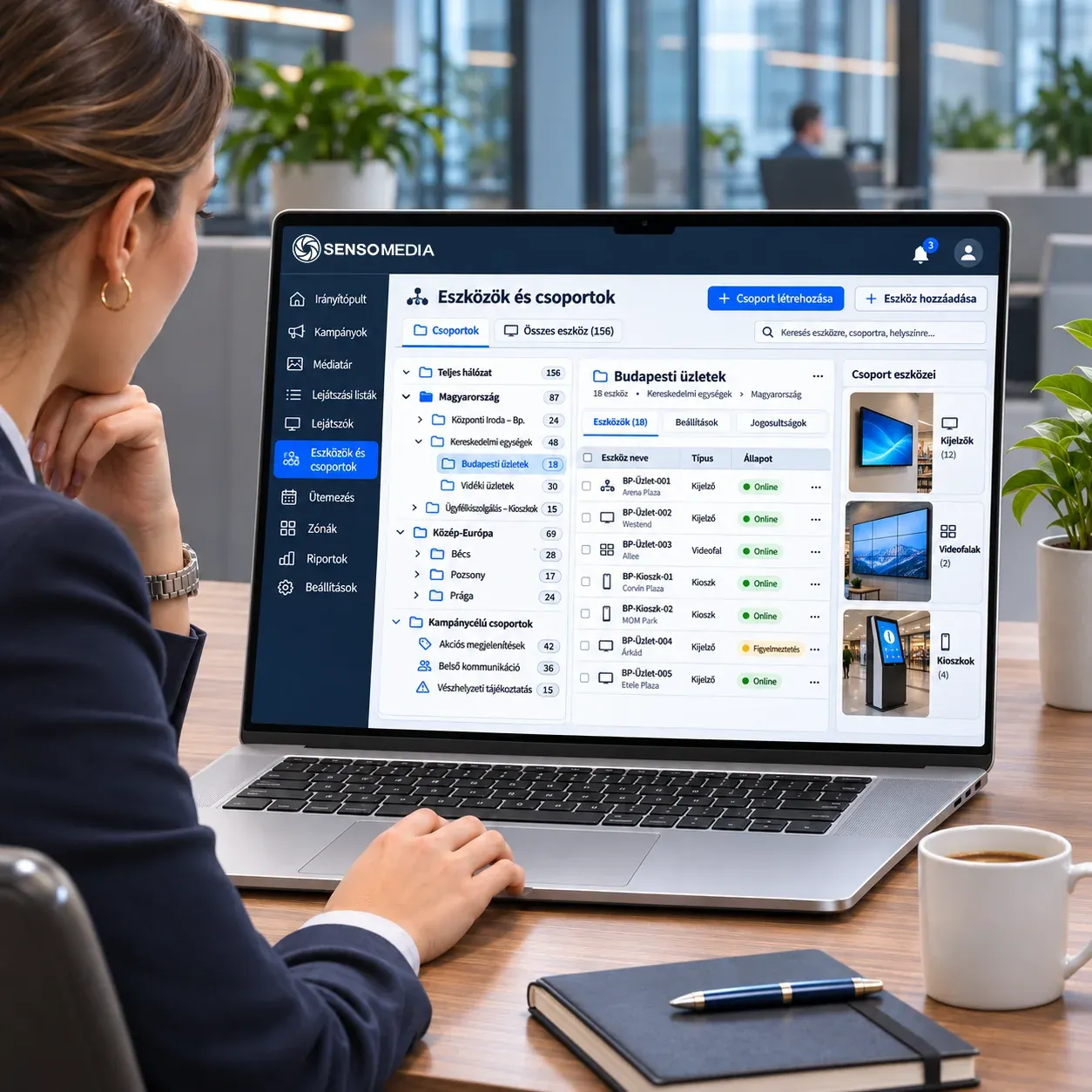
Network displays are organised into custom groups by site, floor, display type or advertising territory, for example.
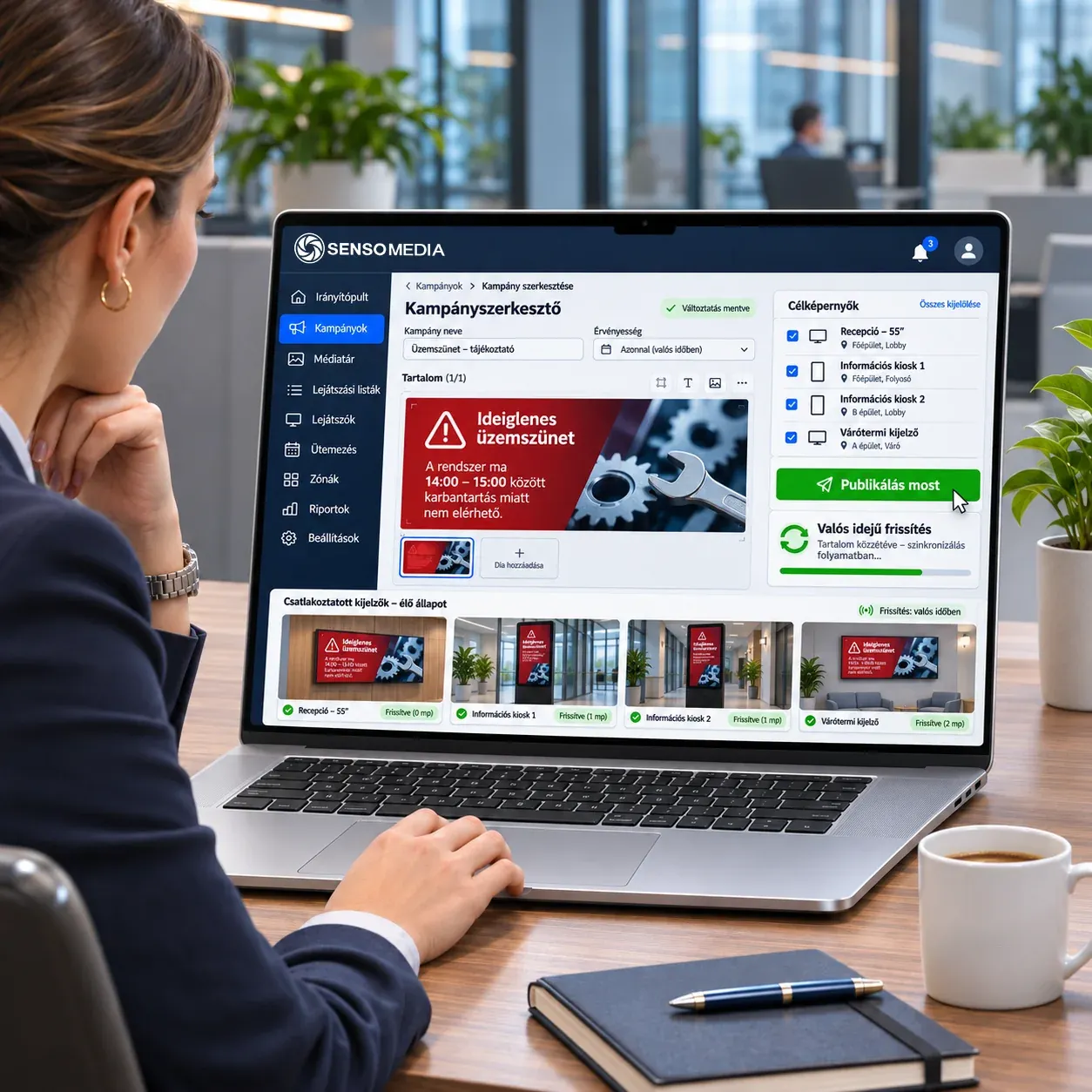
New content and changes are sent centrally to selected devices or groups, supporting rapid offer changes and current local information.
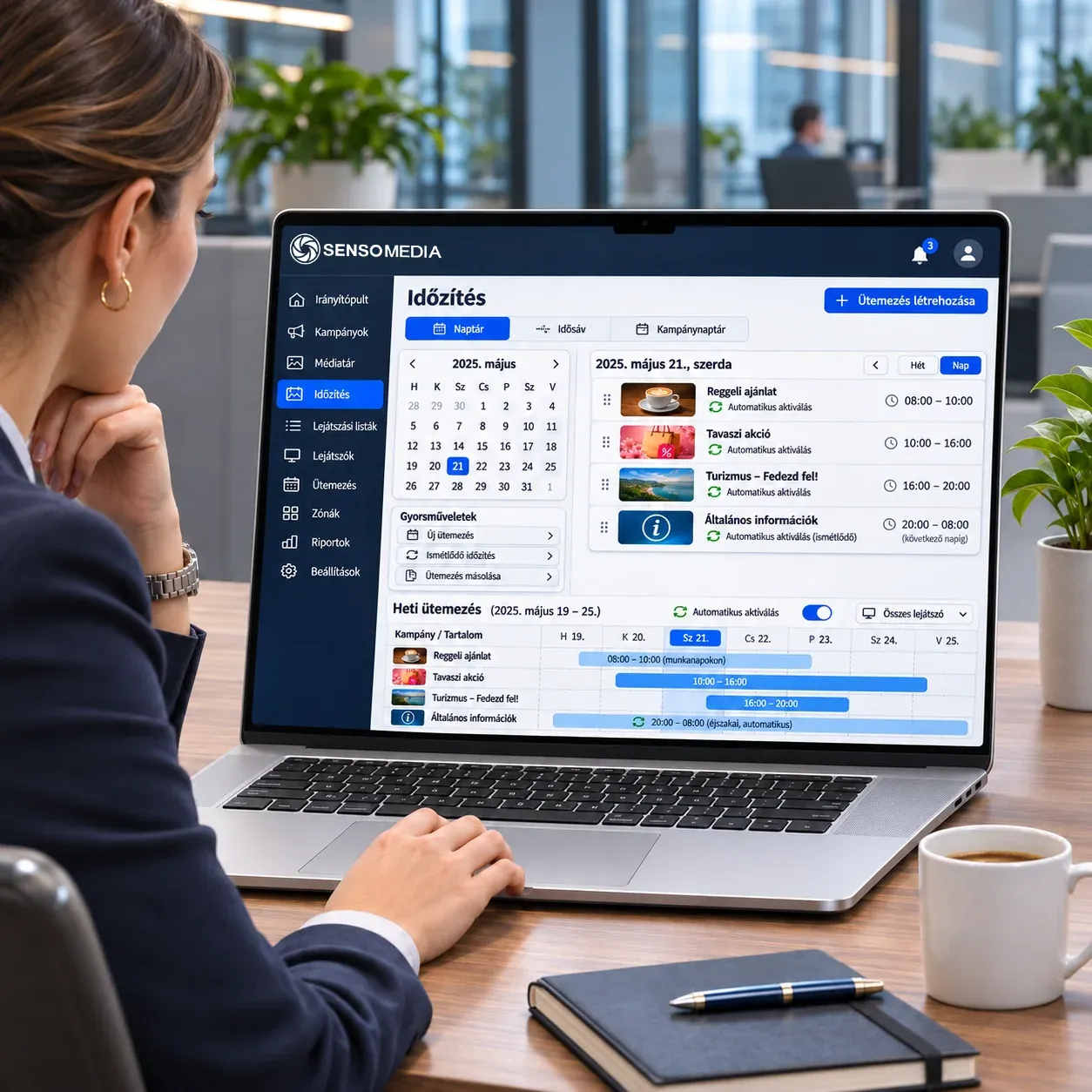
Changes can be scheduled for specified times and periods, preparing the network for campaign launches, events and time-of-day communications.
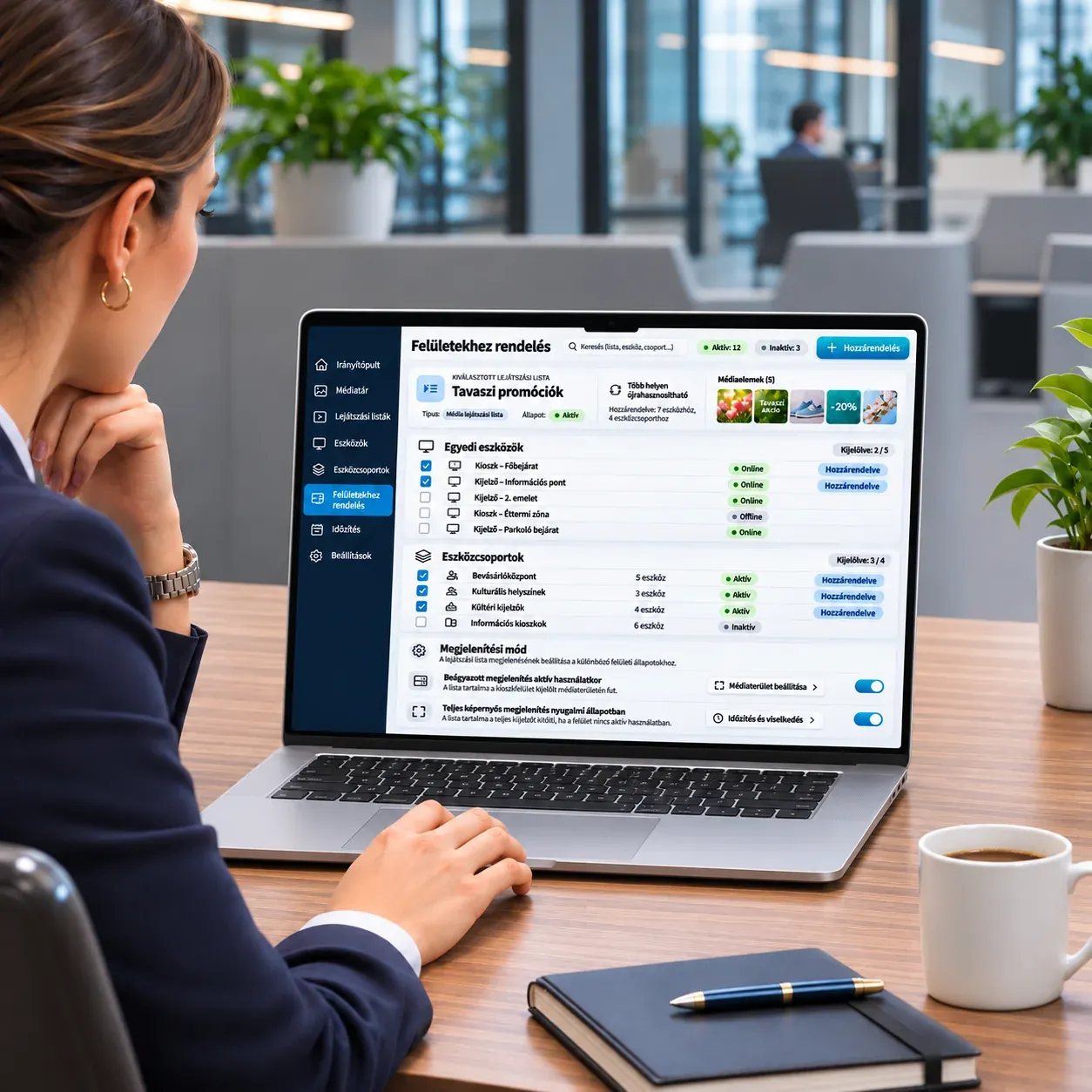
Playlists connect to individual devices or whole groups. For kiosks, active-use and idle playback are aligned with application behaviour.
SENSO Digital Signage can add programmatic provider integration and an internal auction management interface. The hybrid model combines directly sold partner advertising with auctionable impressions in one playback schedule.
The number of slots reserved for programmatic sales can be predefined. Alongside contracted campaigns, part of each display’s capacity becomes available to additional advertisers.

In our standard programmatic model, for example, six items alternate on a display during a campaign period. Four are directly sold partner advertisements added by the operator through content management; two slots are reserved for programmatic content.
The internal interface manages programmatic capacity and its allocation over time. Advertisers bid through the integrated provider’s platform, and winning impressions enter playback through that connection.
Bidding can cover a full two-week campaign, one day’s advertising time or selected times of day, offering advertisers both sustained visibility and particularly valuable periods.
Combining direct sales with auction-based impressions creates additional revenue opportunities and more varied, dynamic content. Operators set the balance between channels to suit their sales model.
Programmatic integration is optional. Provider connections, auctionable slot numbers and available periods are configured to partner requirements.
SENSO Digital Signage can be deployed as a standalone network or within other digital services. Connections are tailored to selected devices and intended uses.
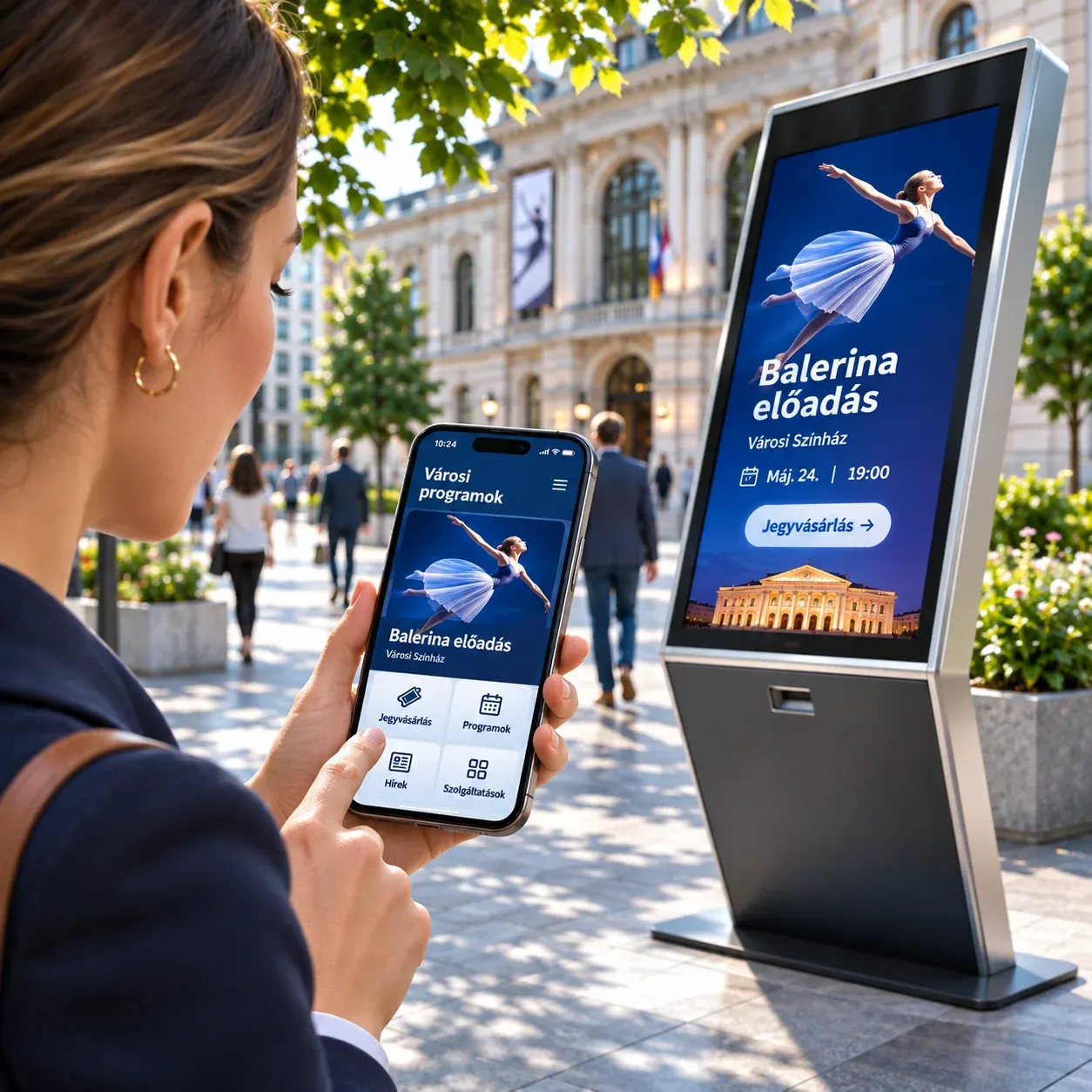
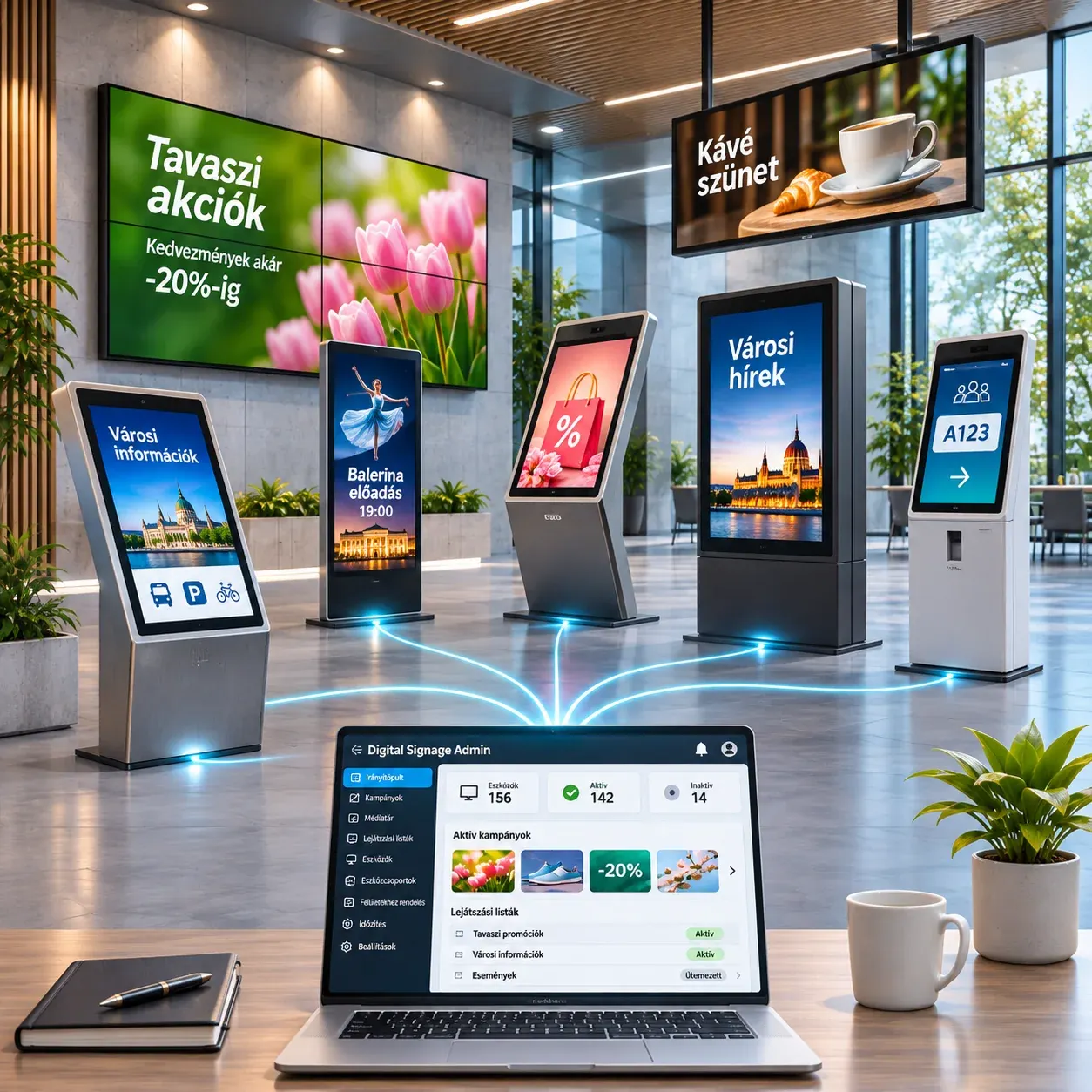
The player can integrate into all our kiosk software interfaces. Information points, ticket machines, ordering terminals and payment terminals can also become centrally managed communication channels.
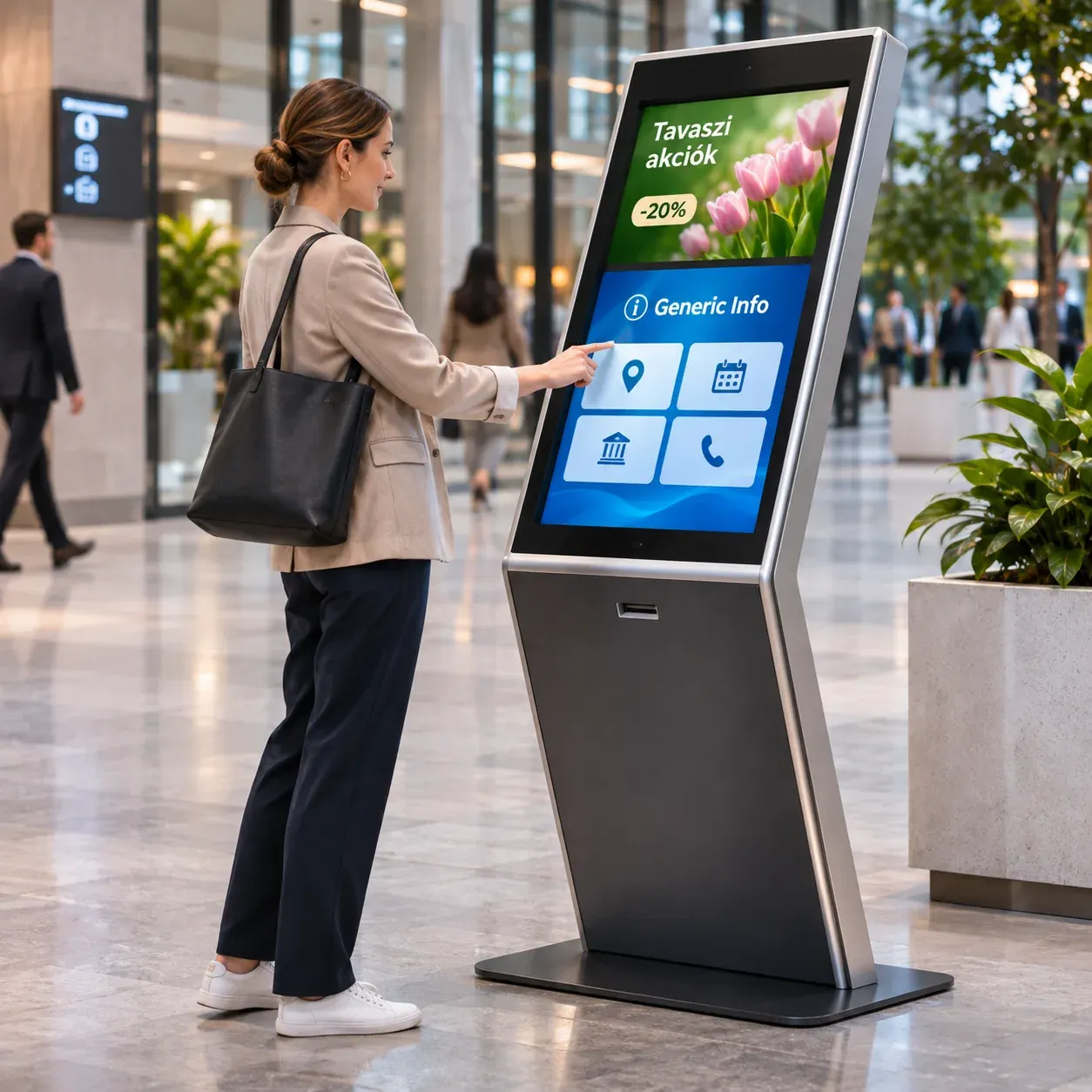
Information search, map navigation and advertising can share one kiosk. Media appear alongside information functions and when the kiosk is idle.
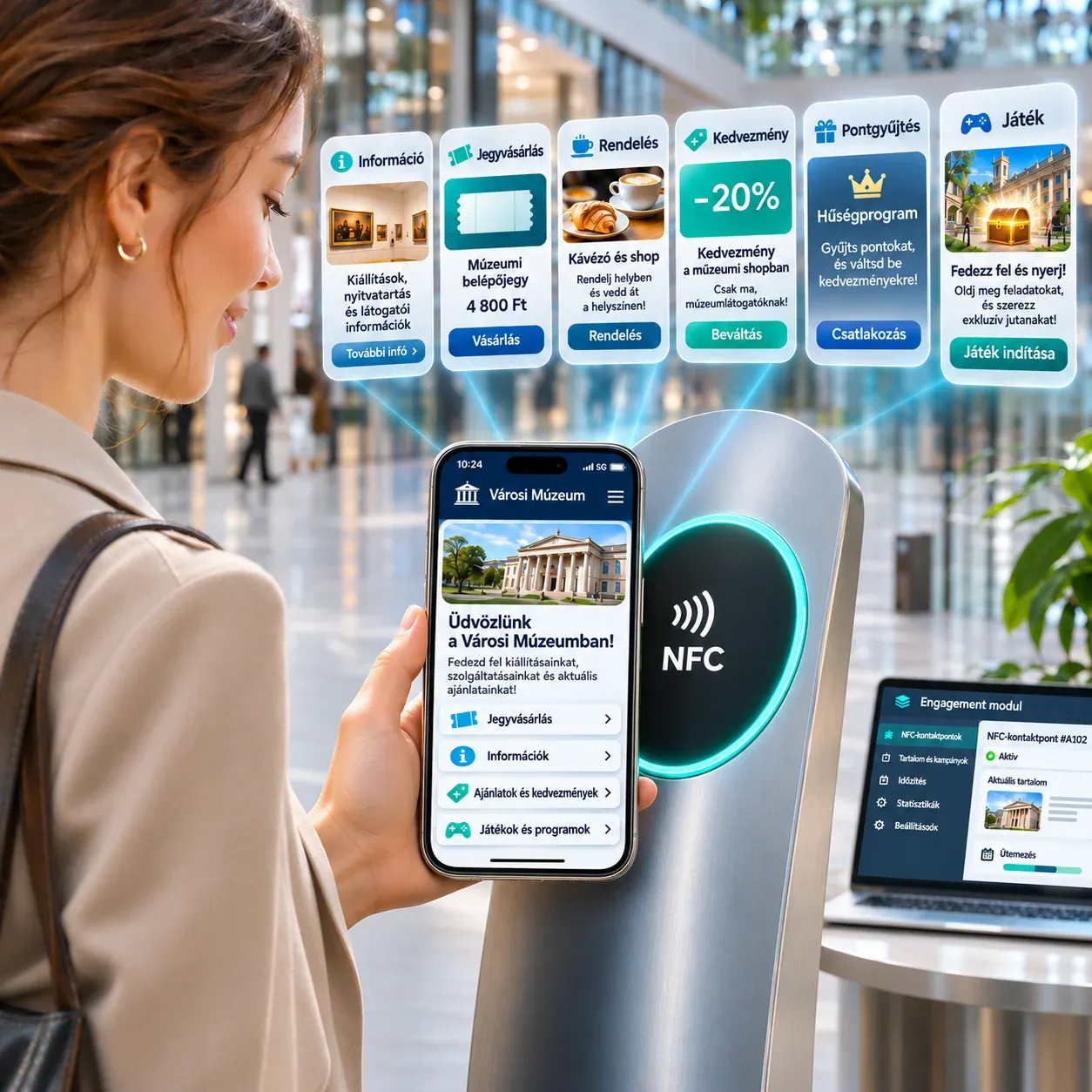
An NFC touchpoint beside the display can open campaign-related mobile content. Visitors access coupons, detailed offers, games or other digital services on their phones.
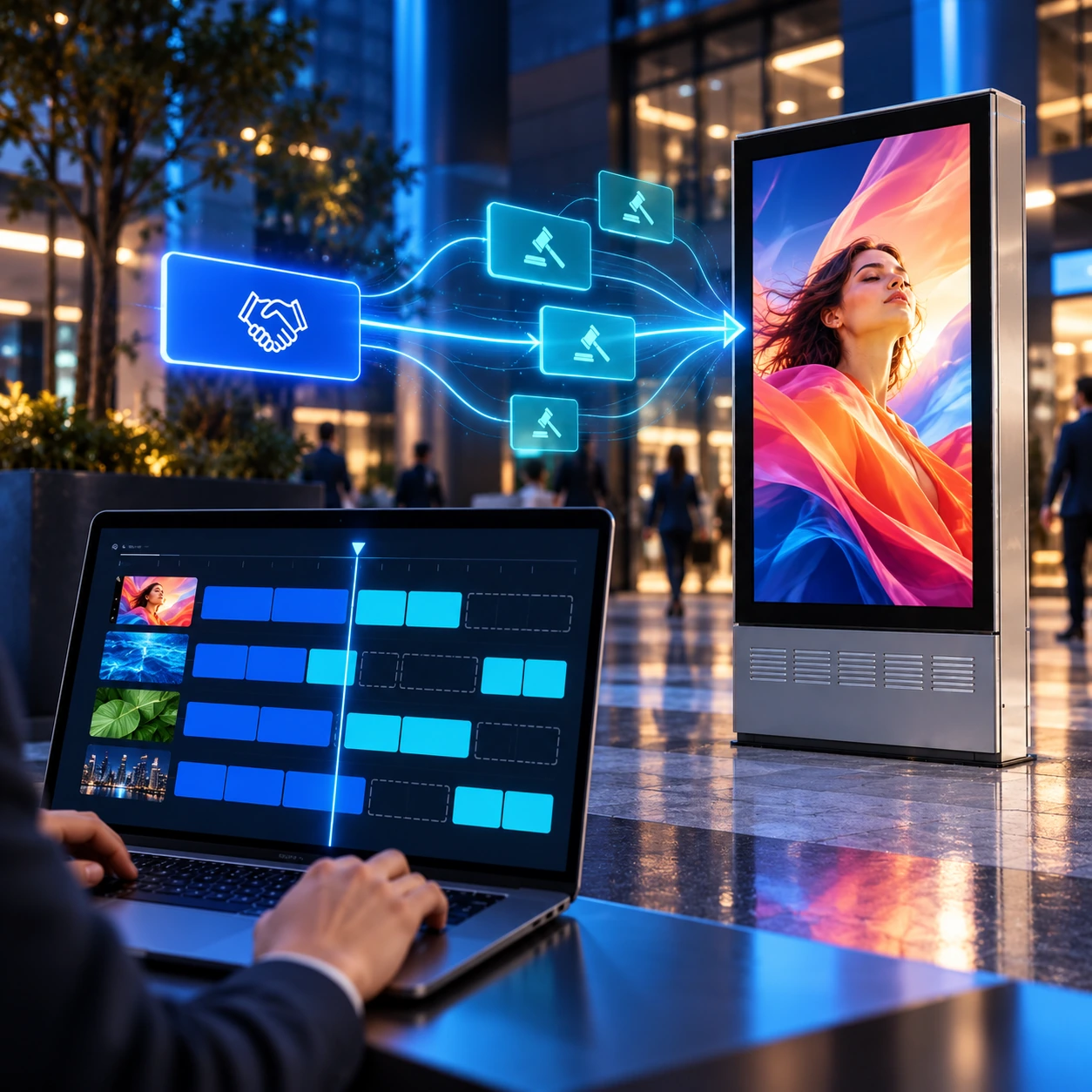
Provider connections link auctionable advertising capacity with content management and playback, coordinating fixed partner campaigns and programmatic impressions.
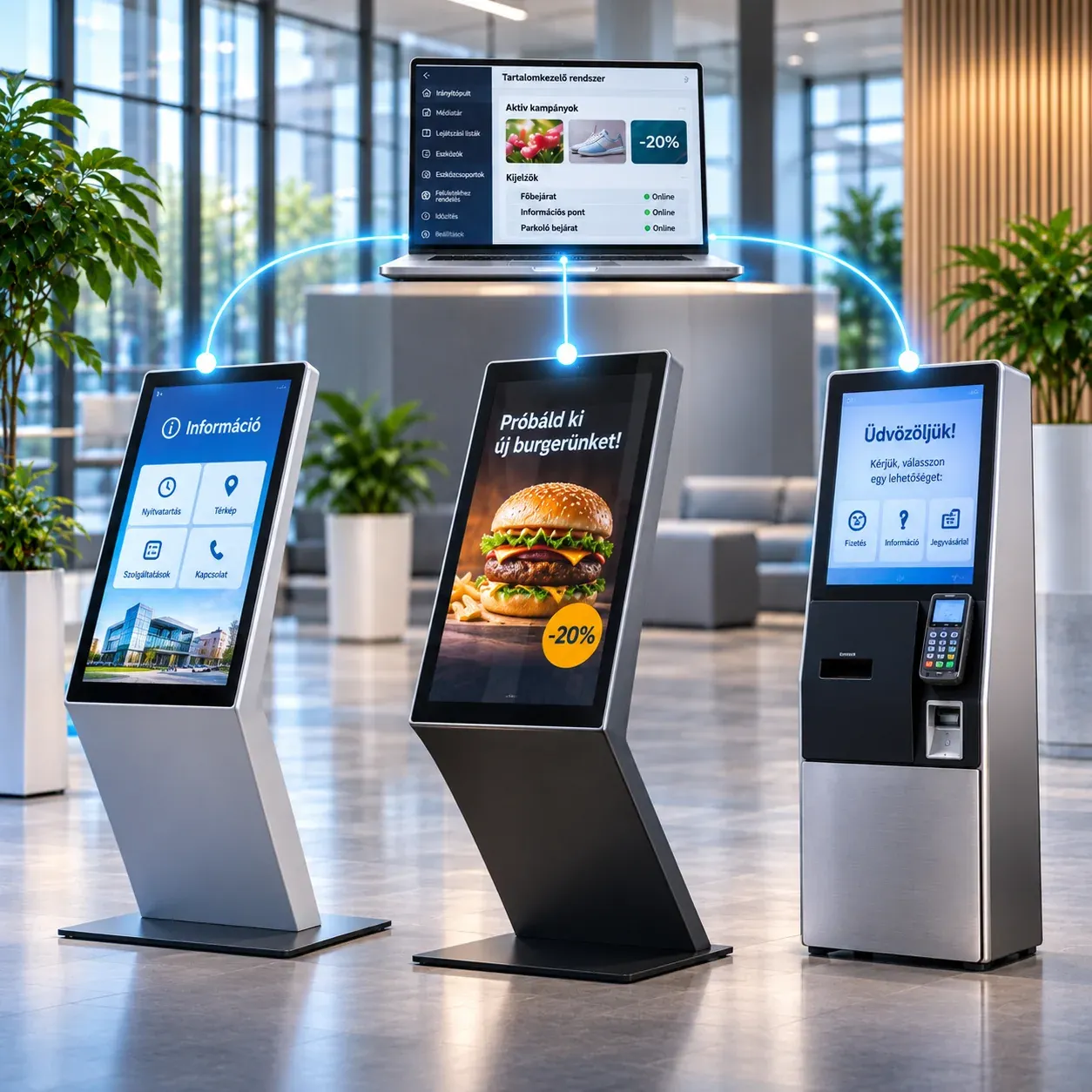
Suitable existing equipment can join the network after technical assessment. Playback, networking and application integration are adapted to each device.
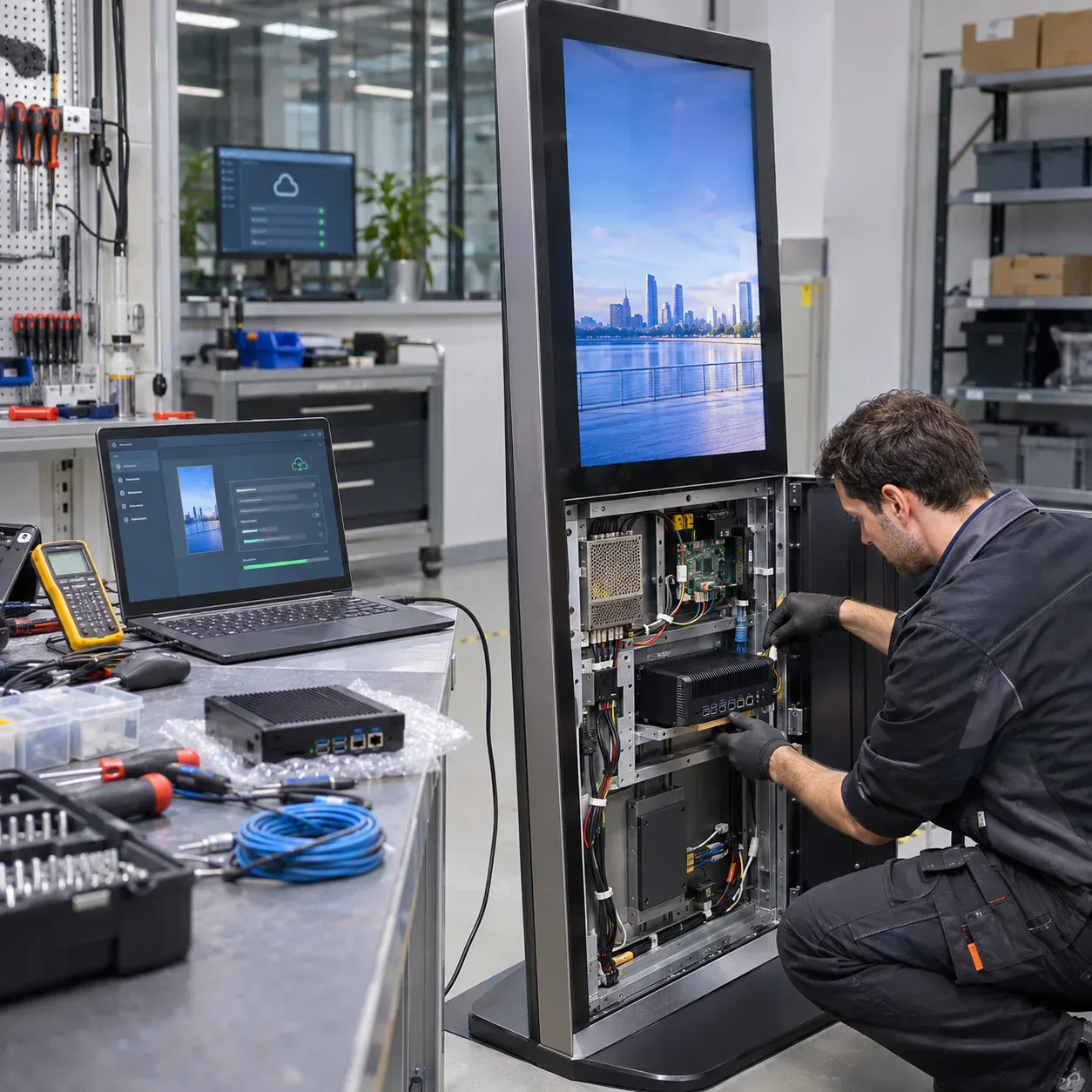
Existing display networks can be renewed with central SENSO software. Before deployment, we assess displays, controllers and network connections and define required hardware and software changes.
Retained equipment connects to central content management; components requiring improvement are refurbished or replaced as recommended. Previously separate displays can become one unified system.
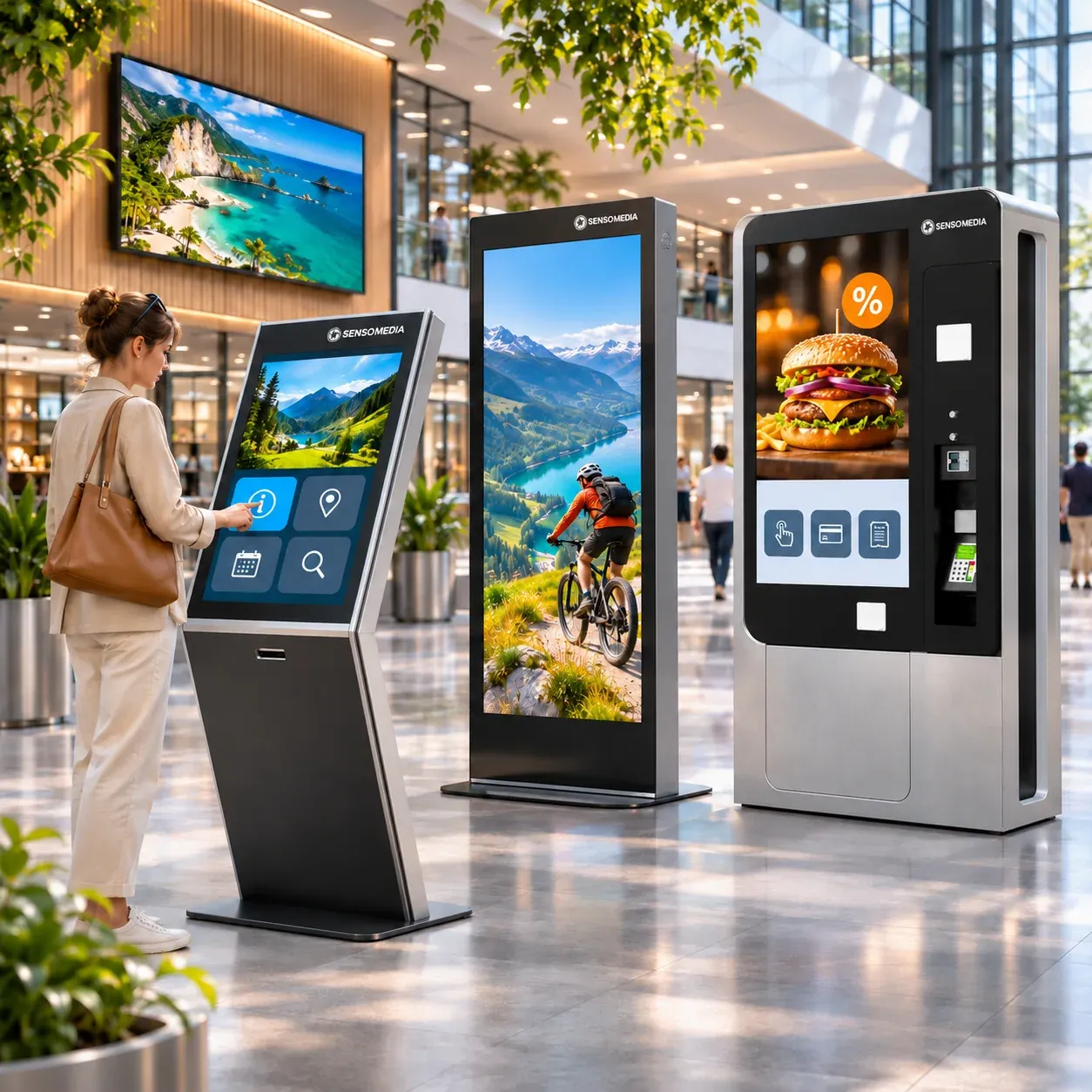
SENSO Digital Signage works with our own advertising displays, kiosks and payment terminals. Configurations are selected for the environment, visibility and device’s primary role.
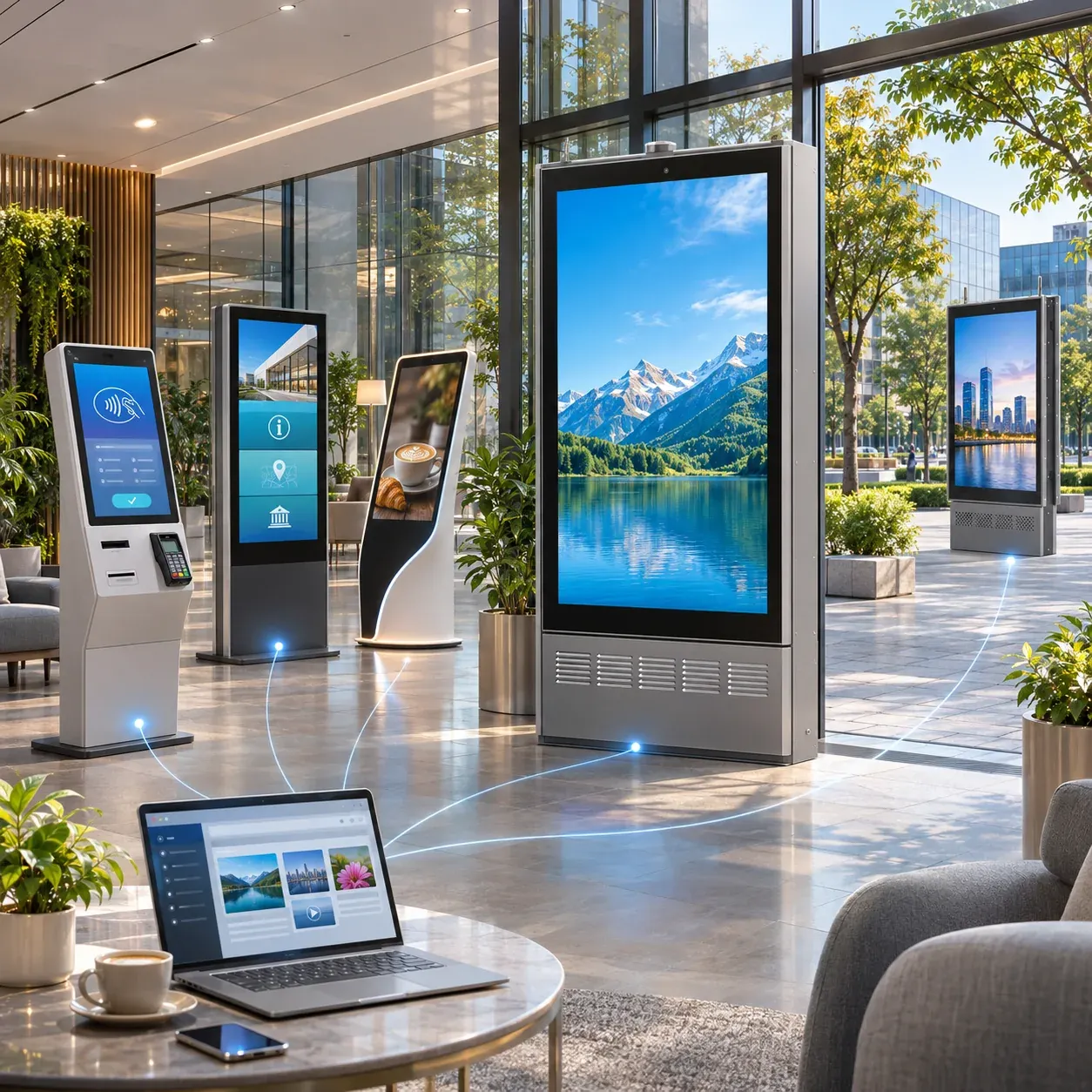
Single and Duo
Single- and double-sided indoor advertising devices for centrally managed campaigns, local information and audience-specific content.
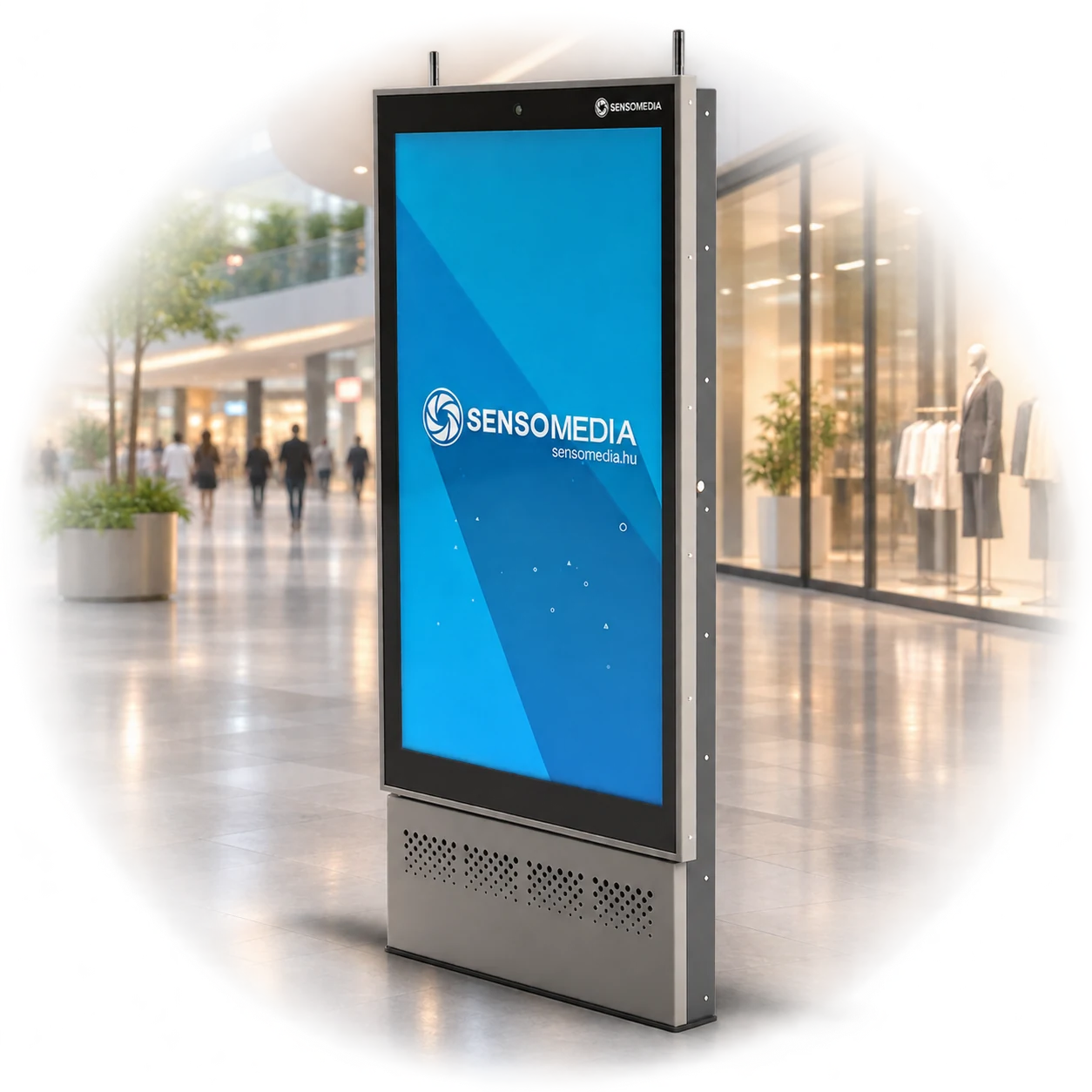
Wall-mounted displays for space-conscious locations. Content is managed alongside the rest of the network using shared or separate playlists.
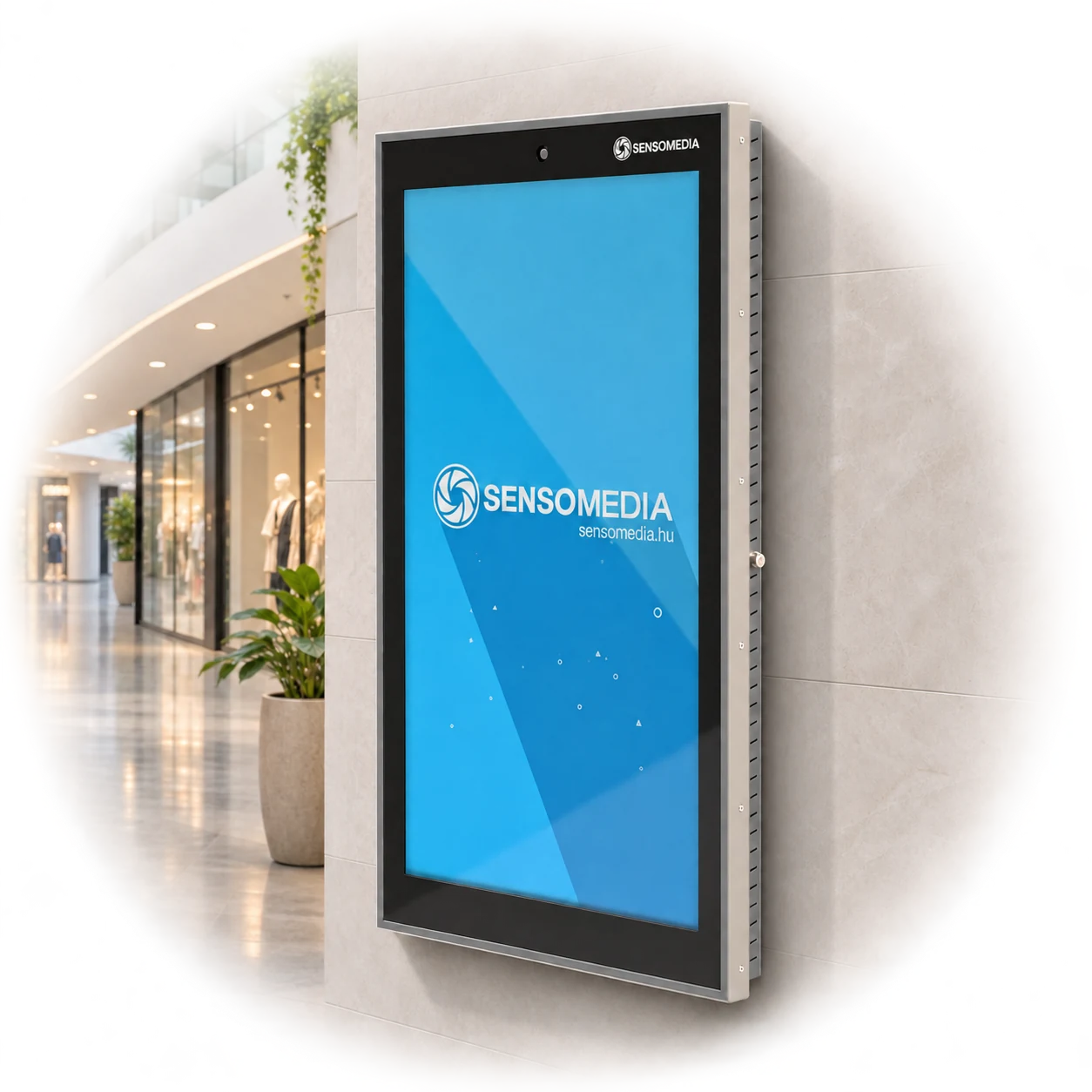
Single and Duo
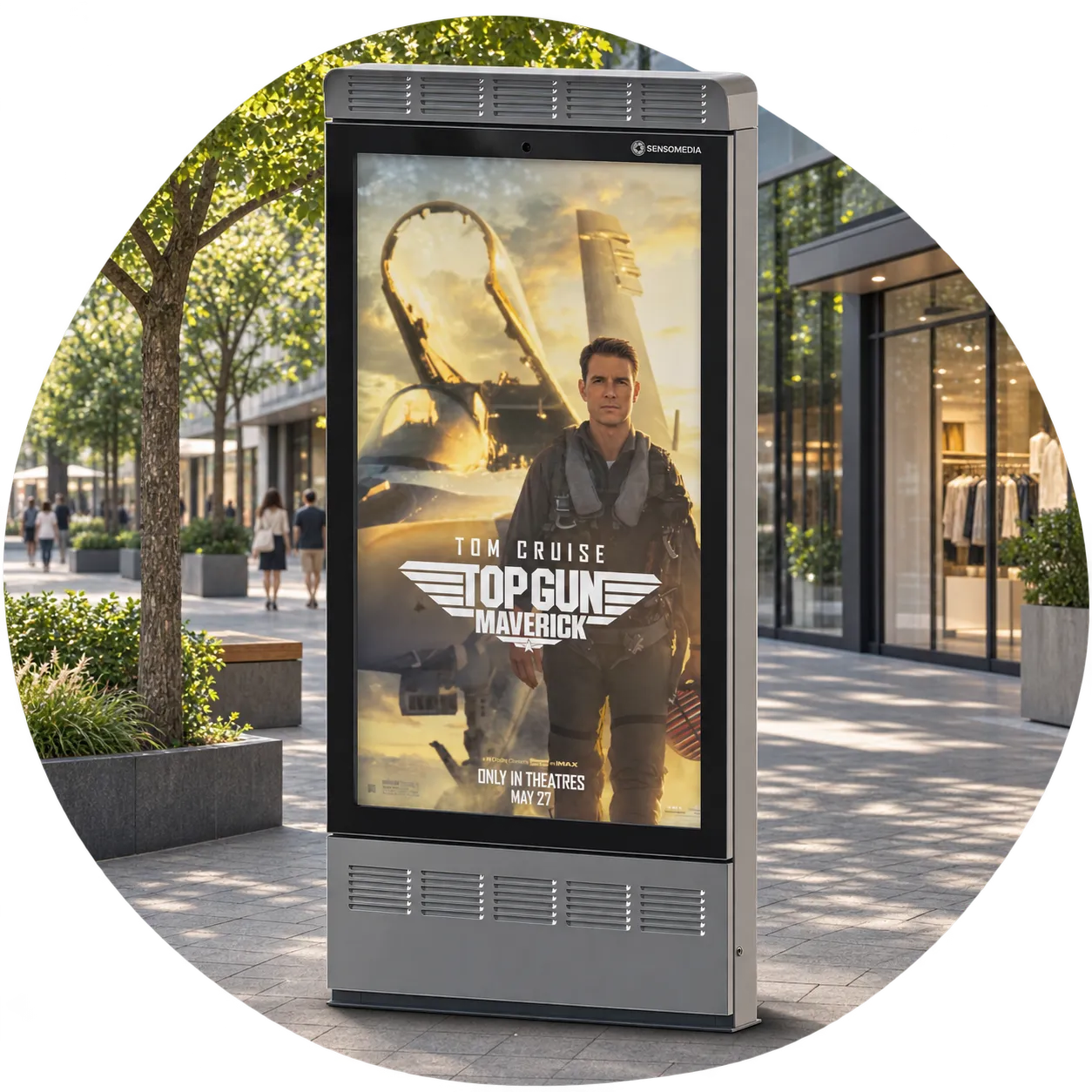
Single- and double-sided outdoor displays can share a system with indoor screens while using location-specific content and schedules.
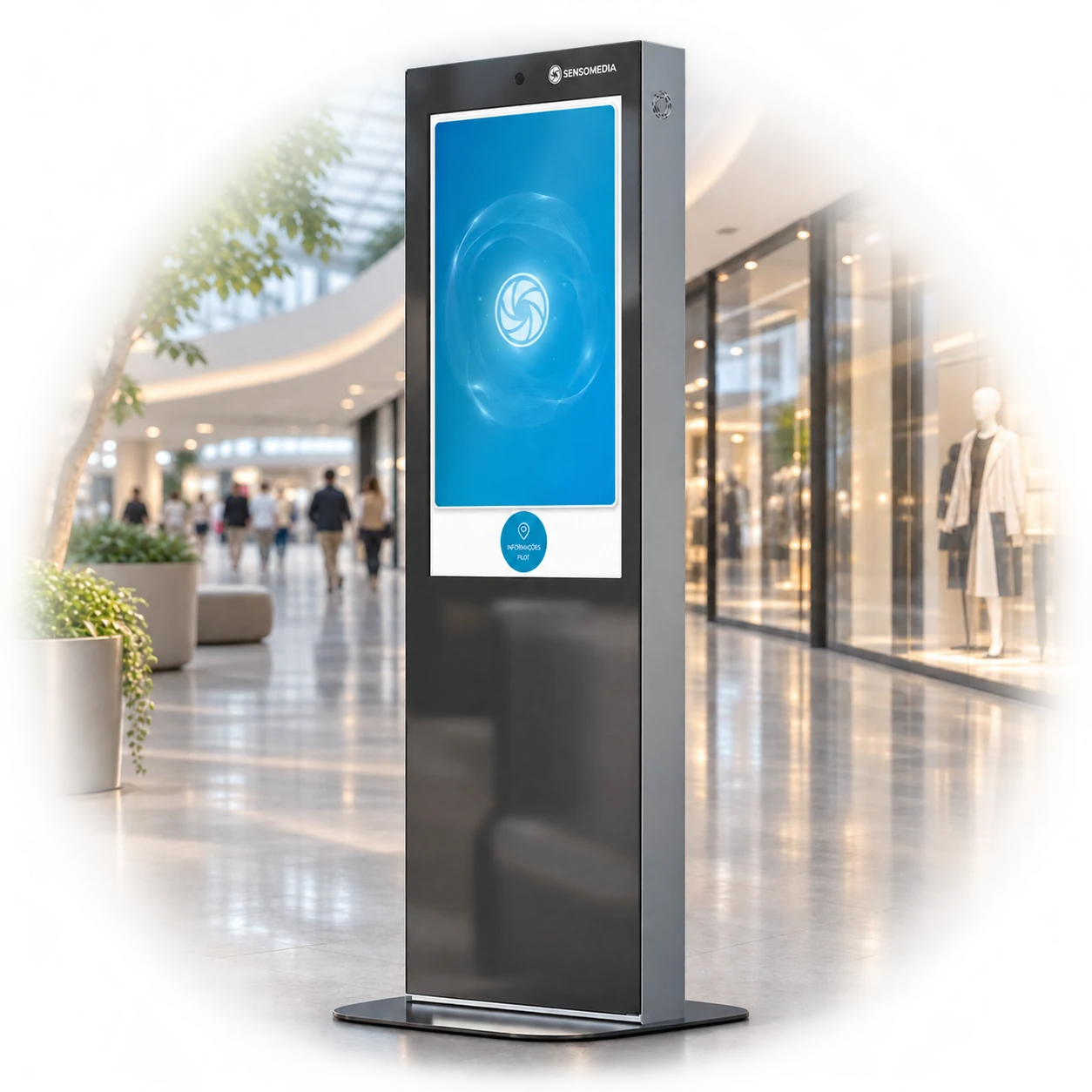
The Digital Signage player integrates into our information kiosk applications. Media appear in a designated area during interaction and full-screen when idle.
Product families: AllPay Lite, AllPay Single, AllPay Duo
An embedded media player displays centrally managed content during payment and while idle. Large-screen models can reach passers-by as well as customers.